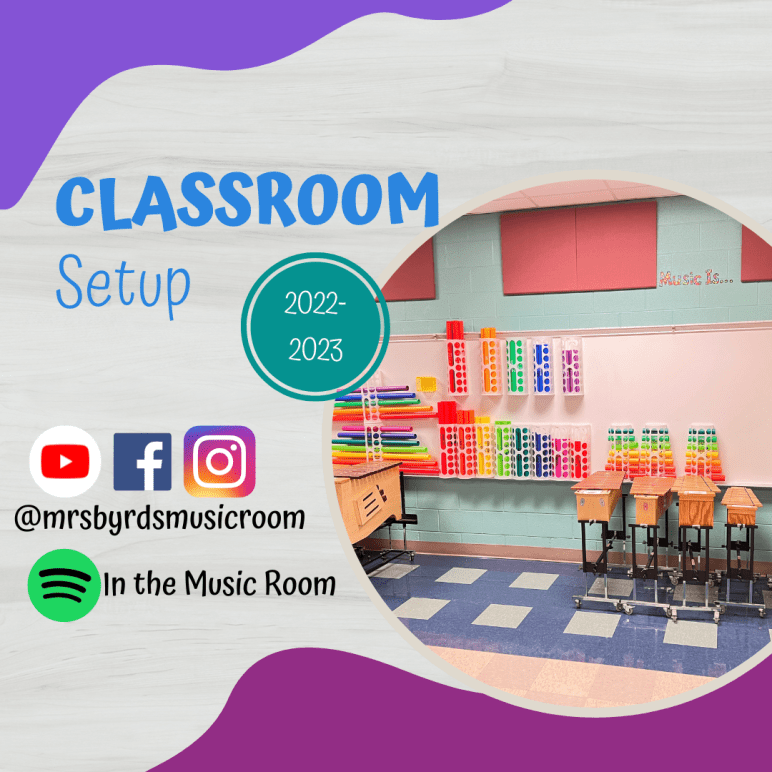
Classroom Setup Off Contract Time

I feel this is a conversation that we need to have as an educational community. I may say some things you disagree with in this podcast, and that’s ok. I probably teach a way you disagree with, and that’s ok too. We aren’t carbon copies of one another and shouldn’t be. The students benefit from our unique personalities and approaches to education. When I think of classroom setup, I view it as an approach to education.

I’m Here eight or More Hours a Day: Let me enjoy my space!

Think about your favorite room in your house. Why is that room your favorite? Is it decorated nicely? Does it smell pleasant? Maybe you have scented candles, fancy lighting, or whatever brings you joy.

If I spend eight or more hours in my classroom every day, I should make it pleasing. I think of my classroom as my home away from home. I want it to look nice, feel comfortable, and be welcoming for students.

If this means I have to come to the school before my contracted time begins, then I will do that. I also write lesson plans off contract too.  

Writing Lesson Plans Off Contract so My Year is Smoother

While my teammates are stressed out during the year, I’m not because I’ve written my plans already. I know that sounds petty, but it is how I manage the stress throughout the year. I try to pre-plan as much as I can. It’s not ideal, and no, I’m not paid to do so, but I’m also not stressed out during the year like other teachers are. To me, that is priceless.

Shaming Other Teachers into Doing Things Your Way

I don’t come into your classroom and tell you how to and what to teach. You don’t walk into my classroom and tell me what or how to teach. Why is working on or off contract time any of your business? I’m not against advocating for teacher pay. I’m not against advocating for better work conditions for teachers, but I don’t need to pull my hair out during the start of the year to prove a point. My teaching partner doesn’t plan the way I do. She does things last minute, which stresses me out, but it works for her. She has very small children that need her during her time at home, so she’s doing what works for her and her family. I will not expect her to change how she manages her workload because I feel stressed. That is not how that works. It is her workload, and it is her time. We should respect how other teachers choose to do their jobs and mind our own business. After all, don’t we teach our students to mind their own business?

When teachers argue among ourselves, it is much easier for others to come in and tear down our system. We have very little control over what happens to our job. I have control over how I spend my personal time. If I want to spend time writing lesson plans or decorating my room, that is what I can control, and it is my business.

Let’s stop shaming the teachers who do the most in their rooms. Let’s stop shaming the teachers who don’t go all out and overboard in their rooms. Maybe too much décor stresses out those teachers, so they need bare walls. Maybe over-the-top décor makes that “extra” teacher feel safe and comfortable. Either way, let each teacher and their classroom show their unique personality.

Sing. Say. Dance. Play. Care.

Analisa
Classroom Management: Control the Chaos from Day 1


Establishing Classroom Rules for a Successful Music Class

Classroom management is crucial in creating a productive and encouraging learning environment. This blog post will explore practical strategies, tips, and techniques to help teachers successfully manage their classrooms beyond building relationships, calling parents, and relying on administrative support. This bottom-up design, starting with lesson instruction and building in classroom management, will keep the lesson flowing and save time and energy while teaching content and desired behaviors. Serious behavior concerns will be easier to address when the more minor, more annoyances and class disruptions are fewer and well-managed.

Creating a Positive Learning Environment in the Elementary Music Classroom

A positive learning environment begins by establishing the culture and climate within your walls. We see a variety of teaching styles and expectations within our day, but the children can and will adapt to your expectations independently of their classroom teachers.

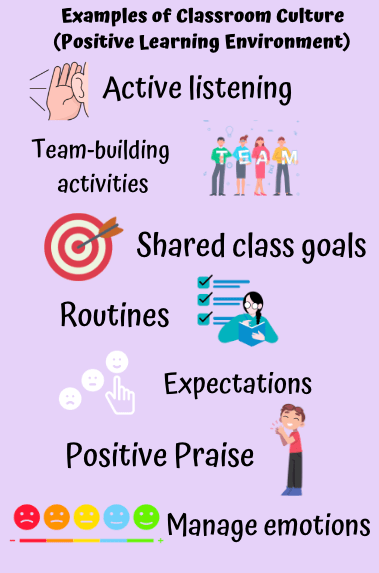
Classroom climate is the psychological things such as the teacher’s behaviors or actions for or with their students. Examples are providing a diverse, fair, equitable, and trustworthy student environment. Creating and following the most current and proven effective teaching practices and safety precautions and following through with expectations will improve your classroom climate. We are constantly told that building relationships is the key to classroom management, but it is challenging to create a relationship with over 500 students; therefore, we must build those relationships within a lesson by focusing on student’s strengths, supporting students in and out of our classrooms (sharing them with the PE teacher during track, or other clubs) and by forming relationships with their parents. Your time is best spent building relationships with parents via Remind, Seesaw, and Class Dojo, apps where you can share what the students are doing collectively versus individual attention. In my classroom, I frequently adapt the phrase “we don’t do that in here” because I often have to remind students that I am not their classroom teacher, their PE teacher, or their fill-in-the-blank teacher so that they remember what I expect in my classroom. Lastly, spending time within a lesson to focus on students’ social-emotional growth is always an investment in time well spent. It promotes buy-in, celebrates their successes, and reminds them that your space is safe.


Classroom culture is the values and norms of how the students and the teacher will work together and their shared values, beliefs, and assumptions. Students want to know how you will make them feel connected to the class and content. To do this, focus on students’ strengths, praise their efforts, and connect with them outside the music room via choir or instrumental clubs.  Provide students with high expectations, increase support in areas they struggle with, both musically and otherwise, show respect to them by providing engaging lessons in a clean and organized environment, and make sure students feel physically and psychologically safe. Have students help you create classroom rules or at least agree on the ones you provide for them, especially rules about communication. Create a space where they can turn problems into teachable moments, placing a positive spin on problem-solving. Maintain a space with a nice flow to and from instruments, movement, and other activities to limit disruptions during transitions, and make sure your classroom décor is meaningful and is used in instruction, not just decoration. If you need to, have individual conversations with students about their behavior or needs, or even chat with the class unrelated to music to build a rapport with them. Lastly, you can provide a classroom job or jobs for students to feel ownership of their environment and learning space.

The Power of Routine: Structuring Your Music Class for Success

Clear and Consistent Procedures: Communicate the procedures and expectations for different activities in your music classroom. Consistency is critical in helping students understand and follow the routines effectively.


How students should enter and exit the classroom:

  • When establishing your classroom set-up, think about how the students will flow from the hallway into your classroom and their assigned spots. Will they sit in rows or semi-circles? Will you use chairs, stools, and sit spots, or students simply remember their spots?
    • In my classroom, I have the students sit on the carpet floors in five to six rows of five or six depending on their class size on body size (grade level)
    • In the front of the rows, I use poly spot arrows to point to the location that are colored, and I use their colors in my routines.
    • Their places are assigned, and they usually remain in these spots for about nine weeks, then we switch spots.
  • Once you know how your children will sit, you can then determine the routine for entering the classroom. Will you greet them at the door somehow? Will you do an entrance song or chant? Will you have a conversation with their classroom teachers?
    • I greet my classes at the door and establish this routine on the first week of school.
    • I let the classroom teachers know that the children are to enter my classroom with me greeting them at the door and conversing with them about absences, illnesses, or anything else I need to know to set my class time up for success. I want to know if Johnny is having a bad day or if Suzy didn’t get enough sleep last night because her mom had a new baby.
  • When class is over, are you ending abruptly or leaving time for a closing activity or lesson summary? Will you have a closing song or chant to get them into a line? What will you do for classes that struggle with making a line? Will you use their classroom teacher’s line order or establish your own method?
    • In my classroom, I try to leave time for closing and not end class abruptly, especially when considering my students who struggle with transitions.
    • I try not to end in the middle of a game but rather give students a heads-up that a game will end because we are running out of time. I have a chant for ending a game “If I do not go today, it’s okay!”
    • Once students are in line, I use this time for some rapport building, having conversations with students unrelated to music, or if we are behind, I use this time for singing a new song or reviewing a concept.
    • When a teacher is late, I try not to make a big deal about it. We all do our best to accomplish everything during our planning time, so I always show grace. Unless it’s getting out of hand or the same offender, then I have a conversation with them about it, but I always keep it light-hearted.

How to handle instruments and materials:

  • Consider your classroom layout, furniture set-up, and access to instruments when creating your routines for passing out materials. Does your environment allow students to access their materials independently, or will they need help? Do you want students to get their instruments, or will you pass them out? What are your instruments and other materials going to be stored in? Will the containers have lids and labels? Can this be a student’s job? What will the students do once they have their materials? What will the students waiting for their materials do?  
    • In my classroom, students are called by rows and get instruments themselves. This process begins in kindergarten with teacher help and extends to upper grades with student independence. Sometimes, I pass instruments out by rows if I have a class that struggles with independence. Whatever process I choose, I stick with it for at least a semester before I change.
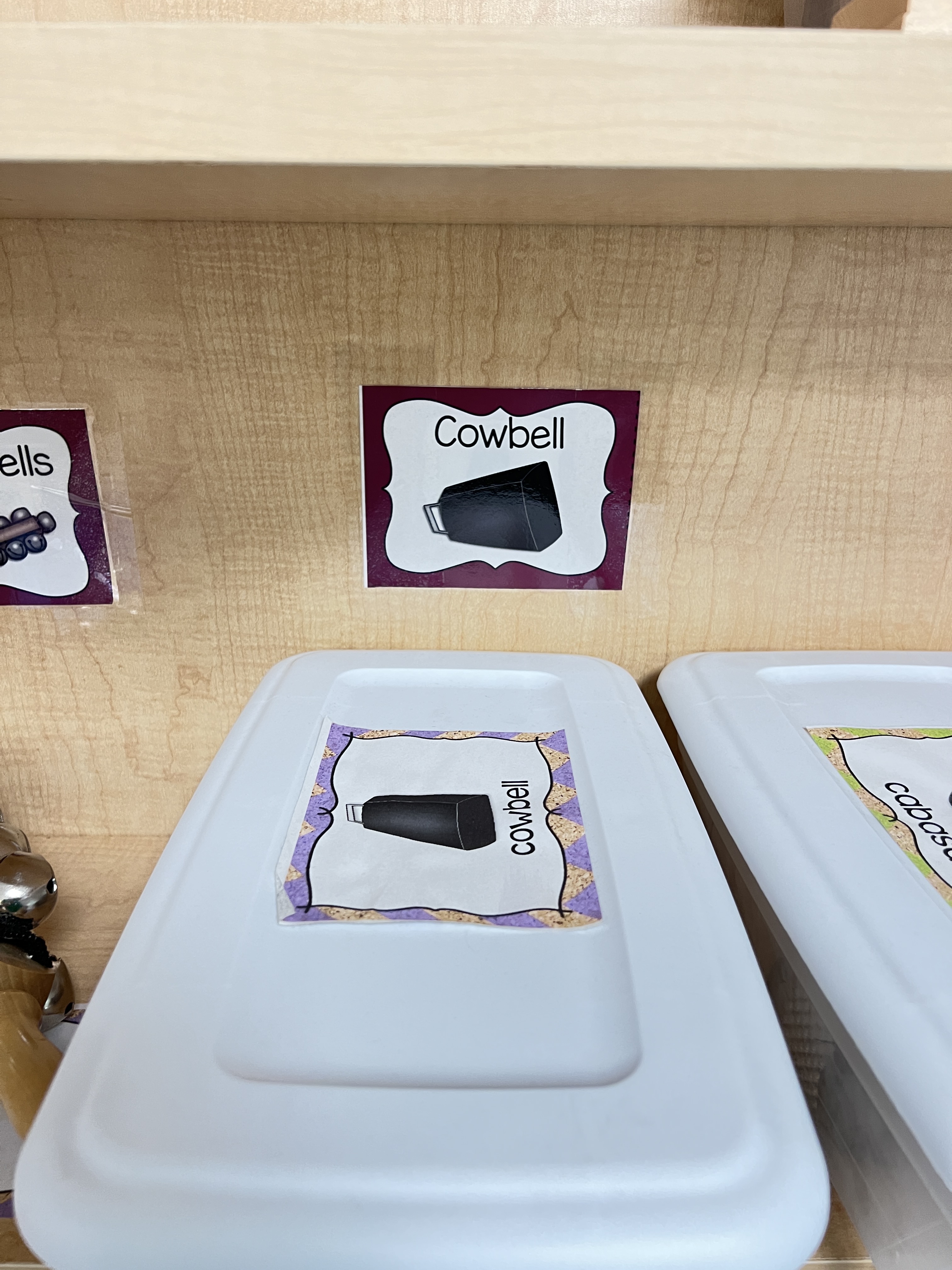
    • I have positioned my shelves where students can access them easily, and I place instruments on the shelves considering their relative height and grade level use. For example, rhythm sticks are lower on the shelves because kindergarten uses them more often than fifth grade. Every instrument is stored in a clear plastic box with a lid and is labeled with a picture and text. The same picture and text are also taped to the shelf where the container goes; if we need to remove the containers off the shelf for any reason, students can easily return them to their correct locations.
    • I have students place their instruments on the floor and wait for everyone to have an instrument in kindergarten and first grade. By second grade, I can start them playing an ostinato or keeping a steady beat with their instrument until everyone has one. Some classes cannot handle that, and they keep their instruments quiet while I continue to teach. It just depends on the grade level, experience, and class ability.
    • I follow this process for all materials, pencils, whiteboards, markers, papers, etc.

How to transition between activities:

  • Consider your classroom layout when transitioning to different activities and parts of the room. Will you use a chime, chants, singing, or silence? Will you do something different each time and use that to keep children engaged during transitions?
    • Whatever type of transition you choose, keep it consistent when moving throughout the classroom. For example, when I move from the carpet to the barred instruments, I always pair students together, and this takes a little bit of time. Still, I find it useful because I use their partner as a mini teacher, so I consider my pairings carefully.
    • When I move from playing barred instruments to the carpet, sometimes we sing, sometimes we chant, or sometimes we move silently. It depends, and the students know I will give the expectation before we transition.

Potty, water, nurse, tissues, all the things:

  • How will students ask to use the restroom, get a drink of water, go to the nurse, get a tissue, or any movement around the room that isn’t related to the whole group?
    • In my classroom, students are not allowed to use the restroom or get water during my class. This is a campus expectation for the safety of our students, as my restroom/water fountain is not located in my classroom, and the closest restroom/water fountain is down the hallway. In our current climate, student safety takes priority, and teachers are expected to take a restroom/water break before specials. Now, in the event of an emergency, we do have a buddy system we implement, but we do not routinely leave the classroom. 
    • If a student needs to get a tissue, they go get one; the procedure is “blow, throw, go” They blow their nose, throw their tissue away, go get hand sanitizer and return to their spot.
    • If a student needs to go to the nurse, we have a campus procedure where we send them with a buddy and a nurse slip that states what the student needs.

Age-Appropriate Routines: Consider your student’s age and developmental level when designing your routines. Younger students may need more guidance and explicit instructions, while older students may be able to handle more independent responsibilities.

Adapt your routines to suit the needs of your specific age group.

  • In my classroom, kindergarten and first grade follow the same routines for getting instruments because I use very explicit language and model everything from walking to the storage location, retrieving the instrument from the container, how to hold the instrument as we walk to our spot, how to place it safely on the floor or ready position, how to play the instruments, etc. I am very specific, and we practice, practice, practice.
    • Second through fifth grade have different expectations, but the same routines are in place. For example, I will give explicit instructions and model fewer times with the upper grades. I am quicker to have students put an instrument away if they do not follow expectations than with a lower grade level. If I have a fairly independent class, I can continue to teach while students get their materials.

Time Management: Plan your lessons and activities with a clear sense of time allocation. Determine how much time to allocate for warm-ups, instruction, practice, and transitions. Teaching students to manage their time effectively within the routines will help maximize instructional time and maintain a smooth flow of activities.

Lesson plan structure matters in a class that is only 25-50 minutes long. You must plan everything to the minute to ensure you are the most effective teacher you can be.


Room entry – 2 minutes

  • Take roll
  • Hello song
  • Stretching or Movement

Begin Lesson – 5 minutes

  • State objective – have students echo the objective for more buy-in
  • Warm up – vocal exploration, rhythm reading, solfege or rhythm games, concentration games, etc.

Lesson Target – 20-25 minutes

  • Focus song/activity
  • High-concentration activity and questioning

Game/Centers/Review – 20-25 minutes

  • Lower concentration activities
  • Singing games or rhythm games for practice or review
  • Centers for independent practice

Exit Room – 5 minutes

  • Line up song
  • Tidy up
  • Review behavior
  • Learn a new song
  • Chat with students

Flexibility and Adaptability: While routines provide structure, it’s essential to be flexible and adapt as needed. Allow room for unexpected circumstances or adjustments to the schedule. Adaptability ensures that your routines can accommodate changes and maintain a positive learning environment.

Keep up with your campus’ schedule and plan around assemblies, field trips, testing, or anything else that throw off the schedule for the planning cycle.

  • At my campus, I see classes once a week, so if I miss a Tuesday 4th-grade lesson, I have to consider all the 4th-grade lessons for that week so class can stay caught up.

Keep a copy of your schedule, sub plans, and basic routines available if you need to be out. Do you want a sub to play instruments with your students? Do you want a sub to show movies? Think about a routine for the substitute teachers to follow; teach that to your students so that when you are away, students can help keep your room clean and safe.

If you haven’t seen this Facebook post (insert a picture of the broken instruments), it is a sad reminder that substitutes do not always follow our plans. This is why teaching students the expectations you want them to follow while you are away is crucial. If you will be out for an extended time and can plan, teach your students your expectations for a long-term sub.


Involve students in the process of establishing routines. Seek their input and allow them to contribute ideas for structuring routines. When students feel a sense of ownership and involvement in the routines, they are likelier to adhere to them and take responsibility for their actions.

When possible and grade level appropriate, allow students to be involved in creating some routines.

  • For example, you can use students to pass out instruments instead of retrieving them if that works better for specific classes or student needs.

Teach and practice the routines explicitly at the beginning of the school year and periodically reinforce them throughout the year.

Consistent reinforcement helps students internalize their routines and become more independent.

  • Use explicit instructions when establishing routines and expectations.
  • Model everything, use student models, and use student leaders to help teach/demonstrate a routine.
  • Practice as often as a class or student needs to be successful and independent at executing the routine.
  • Review and practice routines after breaks and holidays. The review is good for the students and will increase their success.

Regularly reflect on the effectiveness of your routines. Assess whether they are meeting the needs of your students and if any adjustments or modifications are necessary. Classroom dynamics and student needs may change, so reviewing and adjusting your routines is essential.

  • If a routine is not working, do not be afraid to change the routine and re-teach the routine to your students. You can explain why it wasn’t working and why you are changing the routine to increase their buy-in.
  • If you have a routine that works for every class except one or two, do not hesitate to adjust the routine for a specific class. Using different routines with different classes is okay as long as you are consistent with their class.
  • You may need to adjust your routine for classes at the beginning and end of the day to allow for taking attendance or dismissing students.

Considering these factors, you can establish routines that promote a structured, efficient, and positive learning environment in your elementary music classroom.

As always,

Sing, say, dance, play, but above all else, care!

Analisa

Instrument Storage Ideas for an Elementary Music Classroom

When planning your classroom layout, you should consider how you will store your instruments for student use. Here I will outline some ways I store my instruments and make them accessible to my students to aid in their independence.

Small Percussion

Small percussion can sometimes be the worst to organize and keep neat throughout the school year, but I have found that keeping them in containers with lids is the best way to go.

When I put the instrument containers on my shelves, I consider the age of the students using them. I put the instruments that will be used by kindergarten most frequently lower to the ground and the instruments used by older students a bit higher on the shelf. As the year progresses, the kindergarten students will learn to get instruments off the shelf and put them away when they’re done independently.

Drums

In my classroom, I have various sizes of tubano drums, a few djembes, two pairs of bongo drums, a conga, and several hand drums. I organize the larger drums together and place the hand drums on the shelf with the other small percussion. I have a table in my classroom where I can put the larger drums on top of them and keep them off the floor. This isn’t the ideal location; however, it keeps the floor free for movement space.

Last year I used this table to store my drums.

I’m going to try this location this year (2022)

Orff Instruments and Mallets

I am fortunate to have 12 barred instruments and a menagerie of mallets in my classroom. I keep my barred instruments out all the time and use them almost every lesson. In past years I have kept the instruments in the back of my room behind the carpets my students sit on. This year I may put them off to the side of my classroom, but the only concern is that the students won’t be able to see the screen as easily. I keep the mallets on top of the instrument, ready to go. I keep all the extra mallets I use for my percussion ensemble in these small buckets I got from the Dollar Tree several years ago, and the buckets are labeled with pictures so that students know where to return them.

Ukuleles

For several years, I have kept my ukuleles in their boxes. I have Makala brand ukuleles in my room, and they came in these nice cardboard boxes that I numbered to match my student’s numbers. The boxes are starting to age and still look pretty good, but I’m thinking this year I will hang my ukuleles using Command hooks and the storage bags that came with the ukulele. I may use my Cricut to label the bags with their numbers. If I do this, I’ll be sure to update the blog with a photo of the finished product.

Update: I decided to leave them in their boxes. The wall just wasn’t going to work. I will add a photo to the blog when I bring them out.

Instruments for Teacher Use Only

I have several instruments for only my use, including my piano, ukuleles, and various percussion instruments. I keep these instruments close to where I mostly stand in my classroom and on a separate instrument cart that the children know is for teacher use. I only let students I know take piano lessons to play on my piano as I tell them that it is a tool for teaching and not one that I have enough to share or teach them all to play.

Labels

I suggest labeling everything with pictures and words so students can return the instruments to the proper containers. I even have the labels on the shelves where the boxes belong so that my student leaders can help clean up the classroom after we finish the lesson. You can make labels as creative or simple as you would like, but make sure you label everything!

Here are some labels I’ve used:

http://www.teacherspayteachers.com/Store/Lindsay-Jervis

http://www.teacherspayteachers.com/Store/Cori-Bloom

As always –

Sing! Say! Dance! Play! Care!

Analisa

Rules and Procedures for the First Week of Elementary Music

I would first like to say there is no right or wrong way to incorporate rules and procedures into your classroom. There are two camps, one, teach rules and procedures along the way while making music, two, specifically outline the rules and procedures for your students as a stand-alone lesson. I’ve been at my campus for 12 years and I know my administration, my students, and the ins and outs of our behavior systems really well, so I do a hybrid of teaching rules and procedures while doing a small stand-alone mini lesson depending on the age level of my students. Let me explain further… Kindergarteners and fifth graders are on the same level when it comes to testing boundaries. They test boundaries but for entirely different reasons, but both are searching for some autonomy and choices. For kinder and fifth, I would do more mini, stand-alone lessons on rules and procedures than the other grade levels. So here I offer how I teach rules and procedures in my elementary music classroom.

How I Teach Safety Procedures

We all have certain safety procedures that we must teach the first few weeks of school such as fire drills, duck and covers, lockdowns, etc. I always include these in our first meeting because I only see my students once a week and we run drills the first week of school. For the younger students we walk these drills and talk about what we will do in the event of any of these emergencies. For the older students, we speak briefly about what to do and I answer any questions but most of my students are returning from previous years, so we don’t walk the drills unless I feel we have a high number of new students in a specific class. I do not engage in the “what if” game. In other words, if their question begins with “what if” I do not answer it. I simply explain that we have been trained to keep their safety first and, in an emergency, we act the way we’ve practiced and if anything needs to change, they follow instructions from me the first time without discussion. If I’m worried that kindergarten won’t be able to handle the drills well, I have 2-minute videos of my teaching partner and I performing the drills and show those to them and then show them periodically throughout the first few weeks of school to remind them of safety drills. We eventually run the drills with kindergarten by week 3 or so.

How I Teach Classroom Procedures

I teach each procedure as the need arises. I do have students make music the first class, if possible, and I model each procedure and demonstrate every expectation. One unique thing about my campus is that I model this every time using CHAMPS, especially for the lower grades. CHAMPS in a PBIS strategy used to state expectations for student success. For more information on CHAMPS and PBIS go here.

When you model for students the first few times, be literal and very specific with your expectations. For the younger students (K-2) I demonstrate every specific procedure myself showing the do’s and don’ts of each procedure. For example, if it is getting instruments from the shelf, I walk the path they will walk, talking about how I’m not bothering any of the other instruments in the room, then I pick up the instrument and hold it how I want it held on the way back to their spot, finally, I place the instrument in rest position on the floor all the while making mistakes along the way to see if they’ll catch my mistakes. I try to make it fun and playful as I can, but I do model everything. Once they have their instruments I will them demonstrate how to play them and I’m very detailed with that, as well. With the older students (3-5), I can verbally remind them of expectations, and continue to teach while they get what they need.

Classroom Rules

There are many schools of thought that say the students will have more buy-in if they create their own rules. While that might be true for classroom families, I have not found that to work in the music room. Could you imagine having 24-ish sets of rules to post, remember, and enforce? So I use the music rules from MusicTeacherResources on TPT which are:

M – Make good choices

U – Use equipment properly

S – Speak when the time is right

I – Involve yourself in all activities

C – Cooperate with others

When I review CHAMPS with my students, I include their expectations on how this relates to the 5 music rules and if they fail to meet an expectation, we refer to the music rules to see which rule we need to work on.

A Few More Tips

Start each class new. Do not remind your students of how last time went, especially if it was a dumpster fire.

Don’t hold grudges. If a student struggled last time, let it go. Try not to take their behavior personally. Behavior is communication and if a lesson didn’t go well, they are trying to tell you something, so listen to the students and change something next time. Try not to say things like “remember when you did x,y, and z last time?” They don’t remember and if they do, it’s a distant memory and they’ve forgotten what their motivation was.

Build relationships with students and their classroom teachers. Show an exchange of power at the door. Make sure the students hear and see you receive and give updates on their location, well-being, behavior, goals, etc. so they can realize that you are a part of their learning community and truly are a teacher that cares.

Good luck in the new year. Take care of yourself and be kind to yourself. You will make mistakes. You will have good and bad days. Enjoy the good, learn from the bad, and all the days in between are wonderful chances to make music with kids.

Sing. Say. Dance. Play. Care.

Analisa

3 Reasons Why You Need Your Students’ IEP/504 BEFORE the First Day of School

If you are new to teaching, in your first few years, you may not know that specialist, like us, are required to follow a student’s IEP or 504. If you’re in college and just learning about special education, you may not know what an IEP or a 504 is and at the end of this blog I will provide you with some resources to help you become familiar with these documents. For now, I will discuss 3 reasons why you need you students’ IEPs/504s before the first day of school

  1. It’s the Law

A teacher must be aware of a student’s IEP to ensure they are providing proper accommodations from day 1. General education teachers, assistants, and special area (music, PE, art) teachers. Some think specialists do not need to know a student’s diagnosis, academic and behavior levels, accommodations, modifications, related services, and goals, but I disagree. We need more than modifications, accommodations, and behavior plans especially if we are required to come up with our own mods and accommodations to the curriculum. Talk with your special education coordinator to see what can be shared and still maintain a students’ privacy.

2. Preferential Seating and Routines

What is preferential seating? Preferential seating is placing a students’ seat where they will be the most successful in the classroom, not always in the front and not always in the back and not always with the group. If you have a student with a visual impairment, you’ll need to know where they will be most successful in your room and that’s the same for a student with a hearing impairment. Inattentive, wiggly students may benefit from sitting away from the group or even in a special type of seat. Often the wiggly students and students with Autism and ADHD benefit from routine and you will want to establish this from week one. You will want to teach expectations about their seating and seating arrangements so that you can begin to gather appropriate data and keep notes if their seat is a successful place in the room.

3. Triggers

Students with ADHD, emotional disorders, autism, or other mood disorders may struggle with transitions. Leaving their classroom and arriving in your classroom is a big transition and the smaller transitions we have in our classrooms are triggering to some. Transitions, new students, a new teacher, the loud noises from music, any of these may trigger a meltdown or tantrum that could have been avoided. If you have a student in the midst of a meltdown and do not know how to de-escalate, or do not know the difference between a meltdown or tantrum, here are some tips to help you. Imagine if you already knew that the student would need additional support because you had their IEP/504 in advance, you could have these supports in place. You could use accommodations or try to anticipate and prevent a meltdown by minimizing triggers, providing sensory considerations (especially for sound) and establishing routines early.

Additional Tips:

*Seek out updates after annual ARDs                         
*Shred all old IEPs

Resources

*Learn to read an IEP here

*Find help for preferential seating here

Top 5 Books for Back to School

I know, I know it’s still summer, why are we talking about back to school?! We’re worse than Target! I am one of those teachers that plans during the summer so that I can relax during the year a little more. I do a lot of broad plans and tweak them throughout the year, and I’ve found that works well for me, so I won’t fix what is not broken. One of the things I plan for is the first week of school. Here are five books and their lessons that I like to use during the first week or weeks of school!

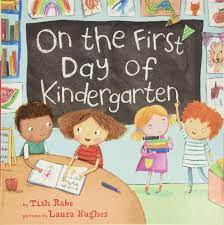
On the First Day of Kindergarten by Trish Rabe

Sing:

Melody: Sung to the tune of “12 Days of Christmas”

Ukulele Chords: C, Am, F, G, D

Link to music here: https://ukutabs.com/m/misc-christmas/twelve-days-of-christmas/?transpose=0#chords-in-this-song

Say:

School routines and procedures for the music classroom and your campus

Dance/Movement:

Creative movement to show actions within the story.

Play:

Students can keep a beat with you or sing along with you if they are comfortable. I would not add instruments on the first week(s) of school.

Care:

Self-awareness: Understanding one’s own emotions, personal goals, and values. Assessing one’s strengths and limitations, having positive mindsets, and possessing a well-grounded sense of self-efficacy and optimism.

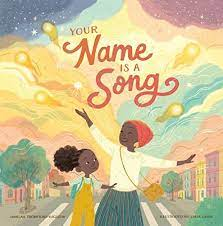
Your Name is a Song by Jamilah Tompkins-Bigelow

Sing:

Melody: Sung to the tune of “12 Days of Christmas”

Ukulele Chords: C, Am, F, G, D

Link to music here: https://ukutabs.com/m/misc-christmas/twelve-days-of-christmas/?transpose=0#chords-in-this-song

Say:

School routines and procedures for the music classroom and your campus

Dance/Movement:

Creative movement to show actions within the story.

Play:

Students can keep a beat with you or sing along with you if they are comfortable. I would not add instruments on the first week(s) of school.

Care:

Self-awareness: Understanding one’s own emotions, personal goals, and values. Assessing one’s strengths and limitations, having positive mindsets, and possessing a well-grounded sense of self-efficacy and optimism.

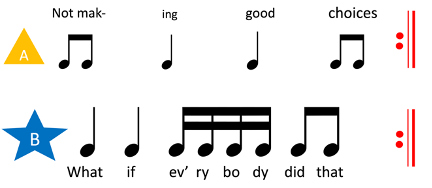
What if Everybody Did That? by Ellen Javenick

My students love this version of the read aloud or you can always read the book yourself!

Sing:

This lesson does not have a melodic component, but you could always compose something or play the rhythms in pentatonic using Boomwhackers or Orff Instruments if you’d like to extend the lesson to have a melodic component.          

Say:

T: Practice the rhythms of the B section

T: Practice the rhythms of the created A section

S: Improvise/create more A rhythmic sentences about things we should not do in our music classroom

Dance/Movement:

You could improvise movements of the different things people should or should not do in the music classroom (example: raising hands or playing instruments without permission)

Play:

Perform: A, B, A’, B etc.

You could use hand drums, tubanos, or any non-pitched percussion instrument to perform the A and B sections.

Care:

Self-awareness: Understanding one’s own emotions, personal goals, and values. Assessing one’s strengths and limitations, having positive mindsets, and possessing a well-grounded sense of self-efficacy and optimism.

My Mouth is a Volcano by Julia Cook

This one is a classic book used in classrooms for quite some time now. I know my classroom teacher friends still use it on occasion, but I usually beat them to it!

Sing:

T: Sing the melody

S: Echo sing, keeping the BX ostinato in their lap. Younger students can just sing the song throughout the text and the teacher plays the BX part and you can leave out the frame (hand) drum part.

Add the frame (hand) drum part to the melody

Say:

Speak the frame (hand) drum part as a rhythmic ostinato

Dance/Movement:

You could add movement to this piece by emphasizing the words “rumble”, “grumble”, “wiggle”, and “jiggle”.

Play:

The orchestration can be adapted for all ages. The younger students will have fun singing the song and possibly adding the drum part depending on their strengths. The older students will like the challenge of putting all three parts together, four, if you added movement.

Care:

Self-management: The ability to empathize, delay gratification, control impulses, and demonstrate perseverance

All Are Welcome by Alexandra Penfold and Suzanne Kaufman

There is an outstanding lesson plan on www.teachingwithorff.com by Daniel Hershman-Rossi.

Sing:

Sing (text to adapated from Music For Children Volume 1. p. 91 #5 )

melody throughout reading the book aloud. This is a quick way to introduce the melody.

Say:

You can speak the text to the song to help students learn the words, especially any ELLs you may have.

Dance/Movement:

This melody is so beautiful you could have children improvise movement to show the phrases.

Play:

The arrangement is easily adapted to various grade levels and instrumentations.

Care:

Social awareness: The ability to understand, empathize, and feel compassion for those with different backgrounds or cultures.

I hope you try one or more of these books in your classroom at the beginning of the year and have great success with them! Happy planning!

Sing. Say. Dance. Play. Care.

Analisa
3 Positive Primers for Elementary Music Classrooms

What are positive primers? A positive primer is anything that primes the brain to accelerate processing and the opposite is a negative primer or slowing the brain down. If I give you something to ready your brain for the response I’m looking for, I’ve primed your brain or accelerated its thought processes toward the memory I would like recalled. If I give you a positive primer and accelerate happiness, I can stimulate higher brain functioning. Today I would like to provide you with 3 positive primers for use in the elementary music classroom.

1. Greet Your Students at the Door

Your students need to see the exchange of power from classroom teacher to music teacher. In my classroom, I ask the teachers for attendance, mainly for student safety, but I like to know who is absent, in the nurse, at the counselor or what have you. It opens other conversations with classroom teachers such as “Johnny is in the counselor right now” becomes “Is Johnny alright, is there anything going on that I need to know about to help support Johnny while he’s in my classroom?”

While the children are entering the door, greet them with words or a safe, gentle touch. You may be the only grown up that gives that baby a hug that day, a handshake, a fist bump, whatever works for you, but greet your students as they walk in. Make it part of your routine, establish it very early on, and make sure the classroom teachers understand that this is part of your routine, and you are not going to make any changes to that, even if they are in a rush.

2. Transitions

Transitions happen so often in the music room and what better time to build relationships with our students. You can make them musical, silent, or a time to have a quick chat with your kids. You can absolutely use transitions as a brain break if your students are a little squirrelly. When you choose your brain breaks, make sure you are reading the room. Go Noodle is great, but make sure you are choosing the correct activity to meet your students’ needs. There are brain breaks that are escalating and will build positive energy and emotions into your lesson. If your students aren’t feeling it that day, and they are a bit low energy, you can try clapping games, yoga pretzels, racing games, movement activities, just have a dance party! Maybe your students are hyped up and have been cooped up on a rainy day and you need to bring them down, you can try a de-escalating break like mirror movements, quiet music, breathing exercises, and other calm movements to build in calm emotions, contentment, serenity, safety and focus for your students.

3. Independent/Whole Group Time

During whole group lessons, encourage your students to be mindful of their accomplishments and successful moments. Have your students perform for one another and share about what went well during the performance or what could be changed to improve their performance. Give them a script to try to follow or a sentence stem, such as, I enjoyed _____ during your performance because you did _____ and _____ well. Or I think _____ went well however it could be better if you changed _______. This will encourage positive dialogue, priming the students to make musical decision when creating music, and to accept criticism in a positive light.

When a student performs independently, whether is a small solo singing or they’re brave to share their compositions, praise them! Prime the experience with positive affirmations and a growth mindset and you’ll discover students are suddenly excited to perform and play music!

However you get your students ready to learn, positive primers are a great way to increase student engagement, stimulate brain functioning and get your students loving music class!

Sing, Say, Dance, Play, Care

Analisa

3 Ways to Use Color as an Accommodation in the Music Room

When our special education students or students with specific learning disabilities come into our classroom it is our job to provide accommodations for them so they can be successful. One of my favorite ways to accommodate for students is using color Before I discuss three ways to use color as a specially designed instruction (SDI) for a student, let me define an accommodation. An accommodation is a way to help students acquire the exact same content as their peers, whereas a modification changes the content. Here, I will discuss using color as an accommodation.

Color Coding A Behavior Plan

For students on a BIP (behavior improvement plan) color can be used for transitions and to stop/start certain behaviors. If a student has an SDI of high contrast materials or limited visual clutter, color can help focus on a specific behavior such as remaining seated on a colored spot or within a colored boundary. In my classroom I have a pink box in the back of the classroom that students can choose to sit inside if they need a break or need a place to just sit away. You would be surprised at how many students love to sit in the box, they feel safe there to just be themselves, move around and wiggle if they need to and not be a bother to those around them. This designated space also works well for students who have preferential seating or a colored boundary. I just used pink duct tape and created a 9X9 space on my floor, easy peasy!

Color Coding Visuals for Melody and Rhythm Instruction

ChromoNotes™ colors or Boomwhacker colors are the ones that are most popularly used in the elementary music classroom. I use ChromoNotes™ colors to color code melodic visuals in my classroom to help keep reading the melody consistent. My students begin to learn that C is red, D is orange, E is yellow, etcetera, and it carries over to all melodic instruments in my classroom. This is great for students who thrive with consistency. For rhythm, I use the

Note Knacks® colors devised my Kristen Pugliese to teach the number of sounds in a beat. For example, a quarter note is red because red has one sound, a pair of eighth notes is yellow because yellow has two sounds. My favorite in this system is terracotta for sixteenth notes!

This system works well to get students started on understanding that rhythm is the number of sounds in a beat and as the rhythms become more complex, the system adapts for that, too!

I use Magnetix for recorder which are trimmed in ChromoNote™ colors so that the students can read the color and the notes on the staff. I know that notes on the staff in “real” music is black, but the purpose is accessibility, if this makes the music more accessible, then why would I not try? If you do not want to use these branded color systems, you don’t have to. You can come up with any color-coding system that works for you and the student. The best accommodations are consistent accommodations and those that work for the student.

Color Coding Instruments  

Colored instruments or stickers on instruments are an accommodation for striking in the correct spot, holding an instrument correctly, etc. This method can be used if a student’s SDI is to identify and limit distractions by providing a “strike zone” for immediate success in playing the instrument. I use the ChromoNotes™ stickers on my Orff instruments to align with the color-coded music. I use the ChromoNotes™ bells, Boomwhackers, and keyboard instruments in my classroom to maintain as much consistency as I can. If you don’t have access to those, the stickers are a perfect option to help color code the instruments you do have.

Color is a wonderful way to provide an accommodation for all music students, especially special education students in music. By using color coding systems for behavior, visuals, and instruments special education students can learn the same content as the other learners. Color can be a dynamic way to meet student’s SDI’s in the music classroom! Give it a try!

Sing! Say! Dance! Play! Care!

Analisa

3 Tips for Effective Classroom Management That Are NOT “Building Relationships”

I’ve been teaching for 16 years now and the only tip I ever hear for effective classroom management is “build relationships”. Every time I hear that I must fight the urge to roll my eyes. It’s not the I don’t believe in building relationships, I do, but I’m also a realist and know that I teach over 500 students, and it is impossible to build a strong relationship with each and every student. I need advice that I can implement quickly, efficiently, and effectively. So here I offer three tips for effective classroom management that does not include building relationships.

1. Be Authentic

In elementary it is often easy to become condescending in your tone. Keep your tone authentic, they’re tiny humans not dogs. Use an authentic tone of voice even when speaking to kindergarteners. Kinder kids do not need the baby coo-ing, singsong, sickly sweet voice if that is not who you are. When you’re fake, the kids know. They know if you’re uncomfortable with your vocal tone, choice of words, and things like that and they will absolutely take advantage of that insecurity. If you are not a naturally silly person, that’s okay, you do not have to be. You do not have to adopt an entirely different personality. Think about the movie Kindergarten Cop, the lead character played to his strengths and the kids responded to that authenticity, that happens in real life, too.  

2. Be Consistent

As specialists, we also inherit the classroom management flaws of our classroom teachers. It is important that we set boundaries with our students and be consistent in our routines and expectations to overcome some of those issues. Being consistent in your discipline and your content delivery will greatly impact the flow of your classroom. Do not give empty threats to the kids to get them to comply. If you say you’re going to do something, then do it. The worse feeling is when kids do not trust you or your word because you lack follow through. Own up to your mistakes and apologize if you make one.

Become a predictable, broken record, when delivering expectations and consequences.

Be consistent with your routines when handing out instruments, materials, playing games, making a circle, all the things! On my campus we use CHAMPS, which is a PBIS approach to behavior management. Not only does this build consistency in your classroom expectations, but it also allows the students to become independent learners.

When you try to change a routine, give it time. If you are constantly changing routines because something isn’t working, it never gets a fair shake. Try the routine for at least a month or two, it takes 21 days to change a habit, so give it time.

3. Be Respectful

Kids will give back the energy they are receiving. They pick up on your vibe. They will give back respect, if they receive it, even THAT kid. Behavior is communication, if students are misbehaving, the energy is off. This is what people mean by building relationships, be respectful all the time. Give kids a time to tell their silly stories, let the chatter box talk your ear off occasionally, you may be the only person that will listen to them.

Watch your tone of voice when you’re upset. It’s hard for me, too, to keep a neutral tone. Sometimes I say things that are sassy, I must check myself and apologize, which goes back to being authentic and consistent. It happens, you’re human. I repeat myself multiple times, that’s when the tone shifts, and I must remind myself to stay in check, keep my tone authentic and give reminders to stay on task, focus, or whatever expectations is my goal.

When a kid feels confronted or backed into a corner, they will of course respond and often they will respond in an inappropriate way. Children do not regulate thoughts and emotions the same way we do. They act first, think second, and this is where we get impulsive behaviors from. It is our job as the adult to keep our tone and behaviors neutral and respectful.


A word about power and control. Do not engage in a battle of power with a student. You know you’re the one in control and power in the room, do not lose that focus, what you want is a student to feel safe, valued, and ready to learn. If there is a student in crisis, remind yourself that your number one job is their safety and learn to let things go. Defiance is usually part of a bigger problem than we can solve in a forty-five-minute class. Document your attempts at redirection, get administrative and parental support and remember to keep them safe, value their feelings, and eventually they will be ready to learn. I’ve had to remove students in crisis from my room before and felt guilty about it, but ultimately my job is to keep the other students safe, as well. Do the best you can, but keep your tone neutral and try, try, try, to keep your cool. I know, it is hard.


I hope these three tips are helpful for you and that you also feel validated in whatever approach to classroom management you choose. Building relationships is such a catch all phrase, but I don’t believe it solves the problems of system classroom management problems. If you consistently have classroom management problems, then maybe try one of these tips and see if they effect change.

Sing! Say! Dance! Play! Care!

Analisa

Teaching On A Prayer

Full disclosure, my friends, I got the idea for this blog during my church’s Trunk or Treat when Livin’ on a Prayer came on and it made me think about how teachers are surviving right now. We’re surviving on sheer will and quite frankly, a prayer. We have to hold on to what we’ve got, it doesn’t make a difference if we make it or not, we’ve got each other and that’s a lot…  Oh, we’re halfway there, o-oh teaching on a prayer! Truer words have never been spoken, Mr. Bon Jovi. Can you believe we still have over 7 months until the summer? How will we ever make it there?  

5 Things to Get Us to the Summer

1. Hold on to what we’ve got

We’ve spent half the school year either avoiding getting sick, being sick, keeping kids from getting sick and trying to teach without enough. Enough staff, stuff, and all the things. We need to keep holding on to the things we do have and keep working. The students aren’t misbehaved because they dislike us or our content, they’re misbehaved because they are trying to regulate. Trust me, just when we find our groove, summer will hit, and we will have to reset in August again. Find ways to use existing resources, TpT resources, social media, and your fellow music teachers in your district to find new and innovative ways to teach students your content. The children are not fully ready to dive into full grade level content and that is ok. The beauty of what we do is that we watch these kiddos grow up and we get to adjust to their specific needs. How cool is that? Other grade level teachers do not have that luxury, but we do. We can adjust in the years to come; we can send our fifth graders off knowing they are loved and valued and have an appreciation of making music with people who care for them. That’s an amazing thing we should not discount.

2. Find someone in your building to talk to

I know that often times music teachers are working alone and do not have another person in their building to talk to about specific music things, but I’m sure there is someone in our building that can commiserate with you about administrative changes, directives that make no sense, and student shenanigans. Sometimes just venting about those things is enough to keep the grumpiness away. We need to know we are not alone in our feelings and in our struggles. Also, we may also be the person who can offer some insight on how to solve some problems and think outside the box.

3. Plan, plan, plan and prepare for the plan to fall apart

I’m a planner, in fact I own like three of them. I’m also able to teach the best lesson by the seat of my pants. Impromptu observation when you planned to show a video about instrument families to save your voice for the tenth time that week? No problem! I can launch into an instrument petting zoo, with information about all the things, complete with higher order thinking questions. I can also plan every song, by concept, for months in advance and execute those plans without even batting an eyelash. Plans are wonderful, long-range planning brings us some comfort, short range planning is great for the times we have disruptions to our plans, but will the lesson fall apart, probably. Will there be a fire drill for the millionth time that month, absolutely, you can plan on it. Have some back up plans ready to go, some quick teach, group activities you can pull out whenever you need to. Have a stash of books, play-alongs, videos, coloring sheets, anything you can quickly pull out, teach, and send the kids off to work on. If a lesson tanks, do not take it personally, dust off that game the kids love to play and do that instead.

4.  Don’t be afraid to dream: Dream of what used to be and what will be again

I miss the old days, when I would work for months on a performance that lasted 26 minutes, that we would somehow stretch to at least 30 minutes so that our PTA meeting would be a total of 45 minutes and worth the parents drive up to the school. I don’t think those days are completely gone, but they are on hold for everyone’s safety right now. So, let’s do some “informances”, use the skills virtual learning taught us and make videos of our kids and what we’re doing in our classrooms and push those out via Google Classroom, SeeSaw, or even Zoom! Bring the parents to your classroom and show what our kids can do and keep reaching out to the community. We put together a video of some of our classes singing a Veteran’s Day song to post on our schools’ social media instead of our entire school Veteran’s Day program we used to host. It is a huge deal at our school, but we just didn’t feel it would be safe to do this year, so we came up with something else. We can still reach our community, advocate for music education, and bring awesome music to our families, just in a different way.

5. Take my hand, we’ll make it, I swear!

Find other music teachers you can brainstorm with, follow my blog and social medias, and a few others I follow here:

Becca’s Music Room by Rebecca Davis

Mrs. Miracle’s Room by Aileen Miracle

O For Tuna by Aimee Pfitzner

Make Moments Matter by David Rowe

We can do this, friends! Together, we can conqour this school year and not only survive, but thrive!

Sing! Say! Dance! Play! Care!

Analisa