Classroom Setup Off Contract Time

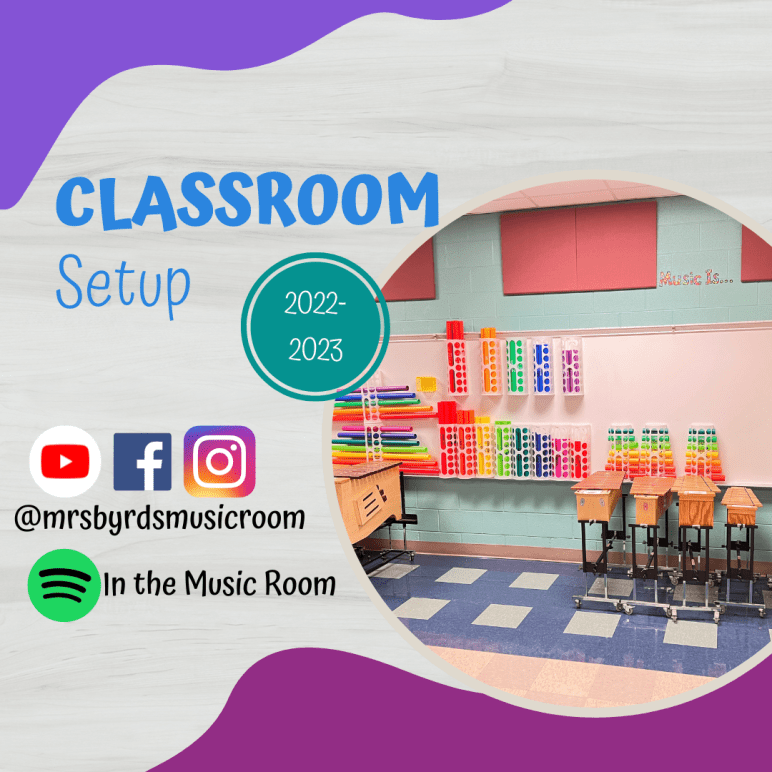
I feel this is a conversation that we need to have as an educational community. I may say some things you disagree with in this podcast, and that’s ok. I probably teach a way you disagree with, and that’s ok too. We aren’t carbon copies of one another and shouldn’t be. The students benefit from our unique personalities and approaches to education. When I think of classroom setup, I view it as an approach to education.

I’m Here eight or More Hours a Day: Let me enjoy my space!

Think about your favorite room in your house. Why is that room your favorite? Is it decorated nicely? Does it smell pleasant? Maybe you have scented candles, fancy lighting, or whatever brings you joy.

If I spend eight or more hours in my classroom every day, I should make it pleasing. I think of my classroom as my home away from home. I want it to look nice, feel comfortable, and be welcoming for students.

If this means I have to come to the school before my contracted time begins, then I will do that. I also write lesson plans off contract too.  

Writing Lesson Plans Off Contract so My Year is Smoother

While my teammates are stressed out during the year, I’m not because I’ve written my plans already. I know that sounds petty, but it is how I manage the stress throughout the year. I try to pre-plan as much as I can. It’s not ideal, and no, I’m not paid to do so, but I’m also not stressed out during the year like other teachers are. To me, that is priceless.

Shaming Other Teachers into Doing Things Your Way

I don’t come into your classroom and tell you how to and what to teach. You don’t walk into my classroom and tell me what or how to teach. Why is working on or off contract time any of your business? I’m not against advocating for teacher pay. I’m not against advocating for better work conditions for teachers, but I don’t need to pull my hair out during the start of the year to prove a point. My teaching partner doesn’t plan the way I do. She does things last minute, which stresses me out, but it works for her. She has very small children that need her during her time at home, so she’s doing what works for her and her family. I will not expect her to change how she manages her workload because I feel stressed. That is not how that works. It is her workload, and it is her time. We should respect how other teachers choose to do their jobs and mind our own business. After all, don’t we teach our students to mind their own business?

When teachers argue among ourselves, it is much easier for others to come in and tear down our system. We have very little control over what happens to our job. I have control over how I spend my personal time. If I want to spend time writing lesson plans or decorating my room, that is what I can control, and it is my business.

Let’s stop shaming the teachers who do the most in their rooms. Let’s stop shaming the teachers who don’t go all out and overboard in their rooms. Maybe too much décor stresses out those teachers, so they need bare walls. Maybe over-the-top décor makes that “extra” teacher feel safe and comfortable. Either way, let each teacher and their classroom show their unique personality.

Sing. Say. Dance. Play. Care.

Analisa
Classroom Management: Control the Chaos from Day 1


Establishing Classroom Rules for a Successful Music Class

Classroom management is crucial in creating a productive and encouraging learning environment. This blog post will explore practical strategies, tips, and techniques to help teachers successfully manage their classrooms beyond building relationships, calling parents, and relying on administrative support. This bottom-up design, starting with lesson instruction and building in classroom management, will keep the lesson flowing and save time and energy while teaching content and desired behaviors. Serious behavior concerns will be easier to address when the more minor, more annoyances and class disruptions are fewer and well-managed.

Creating a Positive Learning Environment in the Elementary Music Classroom

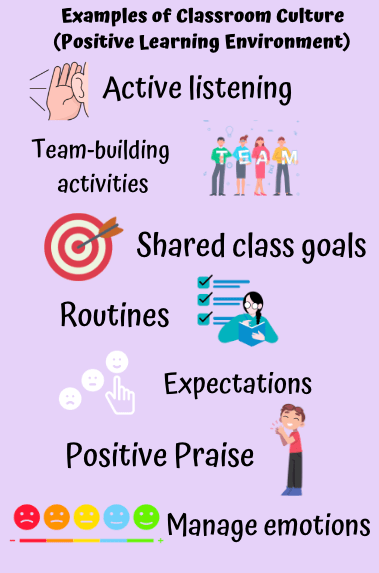
A positive learning environment begins by establishing the culture and climate within your walls. We see a variety of teaching styles and expectations within our day, but the children can and will adapt to your expectations independently of their classroom teachers.

Classroom climate is the psychological things such as the teacher’s behaviors or actions for or with their students. Examples are providing a diverse, fair, equitable, and trustworthy student environment. Creating and following the most current and proven effective teaching practices and safety precautions and following through with expectations will improve your classroom climate. We are constantly told that building relationships is the key to classroom management, but it is challenging to create a relationship with over 500 students; therefore, we must build those relationships within a lesson by focusing on student’s strengths, supporting students in and out of our classrooms (sharing them with the PE teacher during track, or other clubs) and by forming relationships with their parents. Your time is best spent building relationships with parents via Remind, Seesaw, and Class Dojo, apps where you can share what the students are doing collectively versus individual attention. In my classroom, I frequently adapt the phrase “we don’t do that in here” because I often have to remind students that I am not their classroom teacher, their PE teacher, or their fill-in-the-blank teacher so that they remember what I expect in my classroom. Lastly, spending time within a lesson to focus on students’ social-emotional growth is always an investment in time well spent. It promotes buy-in, celebrates their successes, and reminds them that your space is safe.


Classroom culture is the values and norms of how the students and the teacher will work together and their shared values, beliefs, and assumptions. Students want to know how you will make them feel connected to the class and content. To do this, focus on students’ strengths, praise their efforts, and connect with them outside the music room via choir or instrumental clubs.  Provide students with high expectations, increase support in areas they struggle with, both musically and otherwise, show respect to them by providing engaging lessons in a clean and organized environment, and make sure students feel physically and psychologically safe. Have students help you create classroom rules or at least agree on the ones you provide for them, especially rules about communication. Create a space where they can turn problems into teachable moments, placing a positive spin on problem-solving. Maintain a space with a nice flow to and from instruments, movement, and other activities to limit disruptions during transitions, and make sure your classroom décor is meaningful and is used in instruction, not just decoration. If you need to, have individual conversations with students about their behavior or needs, or even chat with the class unrelated to music to build a rapport with them. Lastly, you can provide a classroom job or jobs for students to feel ownership of their environment and learning space.

The Power of Routine: Structuring Your Music Class for Success

Clear and Consistent Procedures: Communicate the procedures and expectations for different activities in your music classroom. Consistency is critical in helping students understand and follow the routines effectively.


How students should enter and exit the classroom:

  • When establishing your classroom set-up, think about how the students will flow from the hallway into your classroom and their assigned spots. Will they sit in rows or semi-circles? Will you use chairs, stools, and sit spots, or students simply remember their spots?
    • In my classroom, I have the students sit on the carpet floors in five to six rows of five or six depending on their class size on body size (grade level)
    • In the front of the rows, I use poly spot arrows to point to the location that are colored, and I use their colors in my routines.
    • Their places are assigned, and they usually remain in these spots for about nine weeks, then we switch spots.
  • Once you know how your children will sit, you can then determine the routine for entering the classroom. Will you greet them at the door somehow? Will you do an entrance song or chant? Will you have a conversation with their classroom teachers?
    • I greet my classes at the door and establish this routine on the first week of school.
    • I let the classroom teachers know that the children are to enter my classroom with me greeting them at the door and conversing with them about absences, illnesses, or anything else I need to know to set my class time up for success. I want to know if Johnny is having a bad day or if Suzy didn’t get enough sleep last night because her mom had a new baby.
  • When class is over, are you ending abruptly or leaving time for a closing activity or lesson summary? Will you have a closing song or chant to get them into a line? What will you do for classes that struggle with making a line? Will you use their classroom teacher’s line order or establish your own method?
    • In my classroom, I try to leave time for closing and not end class abruptly, especially when considering my students who struggle with transitions.
    • I try not to end in the middle of a game but rather give students a heads-up that a game will end because we are running out of time. I have a chant for ending a game “If I do not go today, it’s okay!”
    • Once students are in line, I use this time for some rapport building, having conversations with students unrelated to music, or if we are behind, I use this time for singing a new song or reviewing a concept.
    • When a teacher is late, I try not to make a big deal about it. We all do our best to accomplish everything during our planning time, so I always show grace. Unless it’s getting out of hand or the same offender, then I have a conversation with them about it, but I always keep it light-hearted.

How to handle instruments and materials:

  • Consider your classroom layout, furniture set-up, and access to instruments when creating your routines for passing out materials. Does your environment allow students to access their materials independently, or will they need help? Do you want students to get their instruments, or will you pass them out? What are your instruments and other materials going to be stored in? Will the containers have lids and labels? Can this be a student’s job? What will the students do once they have their materials? What will the students waiting for their materials do?  
    • In my classroom, students are called by rows and get instruments themselves. This process begins in kindergarten with teacher help and extends to upper grades with student independence. Sometimes, I pass instruments out by rows if I have a class that struggles with independence. Whatever process I choose, I stick with it for at least a semester before I change.
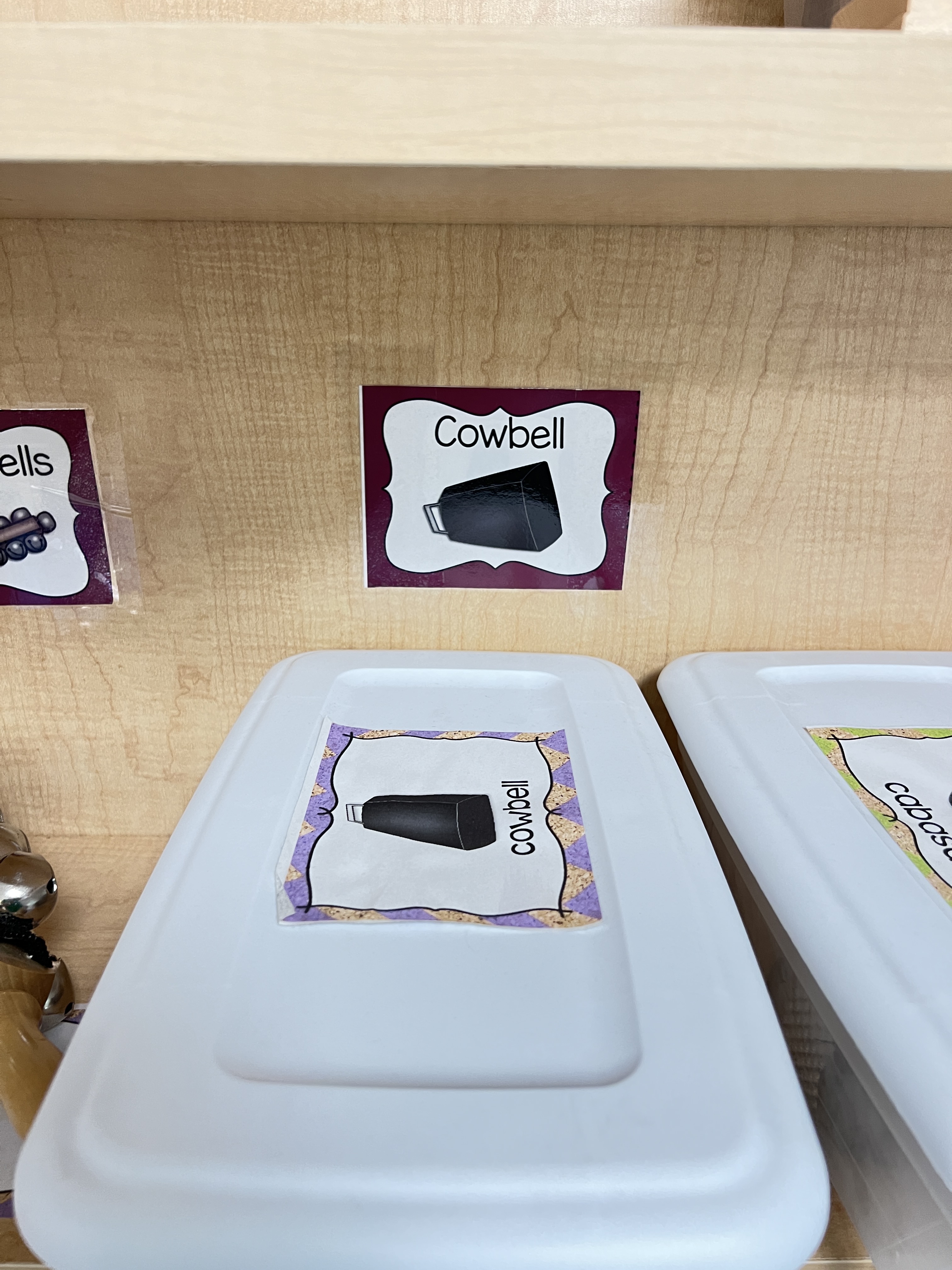
    • I have positioned my shelves where students can access them easily, and I place instruments on the shelves considering their relative height and grade level use. For example, rhythm sticks are lower on the shelves because kindergarten uses them more often than fifth grade. Every instrument is stored in a clear plastic box with a lid and is labeled with a picture and text. The same picture and text are also taped to the shelf where the container goes; if we need to remove the containers off the shelf for any reason, students can easily return them to their correct locations.
    • I have students place their instruments on the floor and wait for everyone to have an instrument in kindergarten and first grade. By second grade, I can start them playing an ostinato or keeping a steady beat with their instrument until everyone has one. Some classes cannot handle that, and they keep their instruments quiet while I continue to teach. It just depends on the grade level, experience, and class ability.
    • I follow this process for all materials, pencils, whiteboards, markers, papers, etc.

How to transition between activities:

  • Consider your classroom layout when transitioning to different activities and parts of the room. Will you use a chime, chants, singing, or silence? Will you do something different each time and use that to keep children engaged during transitions?
    • Whatever type of transition you choose, keep it consistent when moving throughout the classroom. For example, when I move from the carpet to the barred instruments, I always pair students together, and this takes a little bit of time. Still, I find it useful because I use their partner as a mini teacher, so I consider my pairings carefully.
    • When I move from playing barred instruments to the carpet, sometimes we sing, sometimes we chant, or sometimes we move silently. It depends, and the students know I will give the expectation before we transition.

Potty, water, nurse, tissues, all the things:

  • How will students ask to use the restroom, get a drink of water, go to the nurse, get a tissue, or any movement around the room that isn’t related to the whole group?
    • In my classroom, students are not allowed to use the restroom or get water during my class. This is a campus expectation for the safety of our students, as my restroom/water fountain is not located in my classroom, and the closest restroom/water fountain is down the hallway. In our current climate, student safety takes priority, and teachers are expected to take a restroom/water break before specials. Now, in the event of an emergency, we do have a buddy system we implement, but we do not routinely leave the classroom. 
    • If a student needs to get a tissue, they go get one; the procedure is “blow, throw, go” They blow their nose, throw their tissue away, go get hand sanitizer and return to their spot.
    • If a student needs to go to the nurse, we have a campus procedure where we send them with a buddy and a nurse slip that states what the student needs.

Age-Appropriate Routines: Consider your student’s age and developmental level when designing your routines. Younger students may need more guidance and explicit instructions, while older students may be able to handle more independent responsibilities.

Adapt your routines to suit the needs of your specific age group.

  • In my classroom, kindergarten and first grade follow the same routines for getting instruments because I use very explicit language and model everything from walking to the storage location, retrieving the instrument from the container, how to hold the instrument as we walk to our spot, how to place it safely on the floor or ready position, how to play the instruments, etc. I am very specific, and we practice, practice, practice.
    • Second through fifth grade have different expectations, but the same routines are in place. For example, I will give explicit instructions and model fewer times with the upper grades. I am quicker to have students put an instrument away if they do not follow expectations than with a lower grade level. If I have a fairly independent class, I can continue to teach while students get their materials.

Time Management: Plan your lessons and activities with a clear sense of time allocation. Determine how much time to allocate for warm-ups, instruction, practice, and transitions. Teaching students to manage their time effectively within the routines will help maximize instructional time and maintain a smooth flow of activities.

Lesson plan structure matters in a class that is only 25-50 minutes long. You must plan everything to the minute to ensure you are the most effective teacher you can be.


Room entry – 2 minutes

  • Take roll
  • Hello song
  • Stretching or Movement

Begin Lesson – 5 minutes

  • State objective – have students echo the objective for more buy-in
  • Warm up – vocal exploration, rhythm reading, solfege or rhythm games, concentration games, etc.

Lesson Target – 20-25 minutes

  • Focus song/activity
  • High-concentration activity and questioning

Game/Centers/Review – 20-25 minutes

  • Lower concentration activities
  • Singing games or rhythm games for practice or review
  • Centers for independent practice

Exit Room – 5 minutes

  • Line up song
  • Tidy up
  • Review behavior
  • Learn a new song
  • Chat with students

Flexibility and Adaptability: While routines provide structure, it’s essential to be flexible and adapt as needed. Allow room for unexpected circumstances or adjustments to the schedule. Adaptability ensures that your routines can accommodate changes and maintain a positive learning environment.

Keep up with your campus’ schedule and plan around assemblies, field trips, testing, or anything else that throw off the schedule for the planning cycle.

  • At my campus, I see classes once a week, so if I miss a Tuesday 4th-grade lesson, I have to consider all the 4th-grade lessons for that week so class can stay caught up.

Keep a copy of your schedule, sub plans, and basic routines available if you need to be out. Do you want a sub to play instruments with your students? Do you want a sub to show movies? Think about a routine for the substitute teachers to follow; teach that to your students so that when you are away, students can help keep your room clean and safe.

If you haven’t seen this Facebook post (insert a picture of the broken instruments), it is a sad reminder that substitutes do not always follow our plans. This is why teaching students the expectations you want them to follow while you are away is crucial. If you will be out for an extended time and can plan, teach your students your expectations for a long-term sub.


Involve students in the process of establishing routines. Seek their input and allow them to contribute ideas for structuring routines. When students feel a sense of ownership and involvement in the routines, they are likelier to adhere to them and take responsibility for their actions.

When possible and grade level appropriate, allow students to be involved in creating some routines.

  • For example, you can use students to pass out instruments instead of retrieving them if that works better for specific classes or student needs.

Teach and practice the routines explicitly at the beginning of the school year and periodically reinforce them throughout the year.

Consistent reinforcement helps students internalize their routines and become more independent.

  • Use explicit instructions when establishing routines and expectations.
  • Model everything, use student models, and use student leaders to help teach/demonstrate a routine.
  • Practice as often as a class or student needs to be successful and independent at executing the routine.
  • Review and practice routines after breaks and holidays. The review is good for the students and will increase their success.

Regularly reflect on the effectiveness of your routines. Assess whether they are meeting the needs of your students and if any adjustments or modifications are necessary. Classroom dynamics and student needs may change, so reviewing and adjusting your routines is essential.

  • If a routine is not working, do not be afraid to change the routine and re-teach the routine to your students. You can explain why it wasn’t working and why you are changing the routine to increase their buy-in.
  • If you have a routine that works for every class except one or two, do not hesitate to adjust the routine for a specific class. Using different routines with different classes is okay as long as you are consistent with their class.
  • You may need to adjust your routine for classes at the beginning and end of the day to allow for taking attendance or dismissing students.

Considering these factors, you can establish routines that promote a structured, efficient, and positive learning environment in your elementary music classroom.

As always,

Sing, say, dance, play, but above all else, care!

Analisa

Instrument Storage Ideas for an Elementary Music Classroom

When planning your classroom layout, you should consider how you will store your instruments for student use. Here I will outline some ways I store my instruments and make them accessible to my students to aid in their independence.

Small Percussion

Small percussion can sometimes be the worst to organize and keep neat throughout the school year, but I have found that keeping them in containers with lids is the best way to go.

When I put the instrument containers on my shelves, I consider the age of the students using them. I put the instruments that will be used by kindergarten most frequently lower to the ground and the instruments used by older students a bit higher on the shelf. As the year progresses, the kindergarten students will learn to get instruments off the shelf and put them away when they’re done independently.

Drums

In my classroom, I have various sizes of tubano drums, a few djembes, two pairs of bongo drums, a conga, and several hand drums. I organize the larger drums together and place the hand drums on the shelf with the other small percussion. I have a table in my classroom where I can put the larger drums on top of them and keep them off the floor. This isn’t the ideal location; however, it keeps the floor free for movement space.

Last year I used this table to store my drums.

I’m going to try this location this year (2022)

Orff Instruments and Mallets

I am fortunate to have 12 barred instruments and a menagerie of mallets in my classroom. I keep my barred instruments out all the time and use them almost every lesson. In past years I have kept the instruments in the back of my room behind the carpets my students sit on. This year I may put them off to the side of my classroom, but the only concern is that the students won’t be able to see the screen as easily. I keep the mallets on top of the instrument, ready to go. I keep all the extra mallets I use for my percussion ensemble in these small buckets I got from the Dollar Tree several years ago, and the buckets are labeled with pictures so that students know where to return them.

Ukuleles

For several years, I have kept my ukuleles in their boxes. I have Makala brand ukuleles in my room, and they came in these nice cardboard boxes that I numbered to match my student’s numbers. The boxes are starting to age and still look pretty good, but I’m thinking this year I will hang my ukuleles using Command hooks and the storage bags that came with the ukulele. I may use my Cricut to label the bags with their numbers. If I do this, I’ll be sure to update the blog with a photo of the finished product.

Update: I decided to leave them in their boxes. The wall just wasn’t going to work. I will add a photo to the blog when I bring them out.

Instruments for Teacher Use Only

I have several instruments for only my use, including my piano, ukuleles, and various percussion instruments. I keep these instruments close to where I mostly stand in my classroom and on a separate instrument cart that the children know is for teacher use. I only let students I know take piano lessons to play on my piano as I tell them that it is a tool for teaching and not one that I have enough to share or teach them all to play.

Labels

I suggest labeling everything with pictures and words so students can return the instruments to the proper containers. I even have the labels on the shelves where the boxes belong so that my student leaders can help clean up the classroom after we finish the lesson. You can make labels as creative or simple as you would like, but make sure you label everything!

Here are some labels I’ve used:

http://www.teacherspayteachers.com/Store/Lindsay-Jervis

http://www.teacherspayteachers.com/Store/Cori-Bloom

As always –

Sing! Say! Dance! Play! Care!

Analisa

Rules and Procedures for the First Week of Elementary Music

I would first like to say there is no right or wrong way to incorporate rules and procedures into your classroom. There are two camps, one, teach rules and procedures along the way while making music, two, specifically outline the rules and procedures for your students as a stand-alone lesson. I’ve been at my campus for 12 years and I know my administration, my students, and the ins and outs of our behavior systems really well, so I do a hybrid of teaching rules and procedures while doing a small stand-alone mini lesson depending on the age level of my students. Let me explain further… Kindergarteners and fifth graders are on the same level when it comes to testing boundaries. They test boundaries but for entirely different reasons, but both are searching for some autonomy and choices. For kinder and fifth, I would do more mini, stand-alone lessons on rules and procedures than the other grade levels. So here I offer how I teach rules and procedures in my elementary music classroom.

How I Teach Safety Procedures

We all have certain safety procedures that we must teach the first few weeks of school such as fire drills, duck and covers, lockdowns, etc. I always include these in our first meeting because I only see my students once a week and we run drills the first week of school. For the younger students we walk these drills and talk about what we will do in the event of any of these emergencies. For the older students, we speak briefly about what to do and I answer any questions but most of my students are returning from previous years, so we don’t walk the drills unless I feel we have a high number of new students in a specific class. I do not engage in the “what if” game. In other words, if their question begins with “what if” I do not answer it. I simply explain that we have been trained to keep their safety first and, in an emergency, we act the way we’ve practiced and if anything needs to change, they follow instructions from me the first time without discussion. If I’m worried that kindergarten won’t be able to handle the drills well, I have 2-minute videos of my teaching partner and I performing the drills and show those to them and then show them periodically throughout the first few weeks of school to remind them of safety drills. We eventually run the drills with kindergarten by week 3 or so.

How I Teach Classroom Procedures

I teach each procedure as the need arises. I do have students make music the first class, if possible, and I model each procedure and demonstrate every expectation. One unique thing about my campus is that I model this every time using CHAMPS, especially for the lower grades. CHAMPS in a PBIS strategy used to state expectations for student success. For more information on CHAMPS and PBIS go here.

When you model for students the first few times, be literal and very specific with your expectations. For the younger students (K-2) I demonstrate every specific procedure myself showing the do’s and don’ts of each procedure. For example, if it is getting instruments from the shelf, I walk the path they will walk, talking about how I’m not bothering any of the other instruments in the room, then I pick up the instrument and hold it how I want it held on the way back to their spot, finally, I place the instrument in rest position on the floor all the while making mistakes along the way to see if they’ll catch my mistakes. I try to make it fun and playful as I can, but I do model everything. Once they have their instruments I will them demonstrate how to play them and I’m very detailed with that, as well. With the older students (3-5), I can verbally remind them of expectations, and continue to teach while they get what they need.

Classroom Rules

There are many schools of thought that say the students will have more buy-in if they create their own rules. While that might be true for classroom families, I have not found that to work in the music room. Could you imagine having 24-ish sets of rules to post, remember, and enforce? So I use the music rules from MusicTeacherResources on TPT which are:

M – Make good choices

U – Use equipment properly

S – Speak when the time is right

I – Involve yourself in all activities

C – Cooperate with others

When I review CHAMPS with my students, I include their expectations on how this relates to the 5 music rules and if they fail to meet an expectation, we refer to the music rules to see which rule we need to work on.

A Few More Tips

Start each class new. Do not remind your students of how last time went, especially if it was a dumpster fire.

Don’t hold grudges. If a student struggled last time, let it go. Try not to take their behavior personally. Behavior is communication and if a lesson didn’t go well, they are trying to tell you something, so listen to the students and change something next time. Try not to say things like “remember when you did x,y, and z last time?” They don’t remember and if they do, it’s a distant memory and they’ve forgotten what their motivation was.

Build relationships with students and their classroom teachers. Show an exchange of power at the door. Make sure the students hear and see you receive and give updates on their location, well-being, behavior, goals, etc. so they can realize that you are a part of their learning community and truly are a teacher that cares.

Good luck in the new year. Take care of yourself and be kind to yourself. You will make mistakes. You will have good and bad days. Enjoy the good, learn from the bad, and all the days in between are wonderful chances to make music with kids.

Sing. Say. Dance. Play. Care.

Analisa

3 Reasons Why You Need Your Students’ IEP/504 BEFORE the First Day of School

If you are new to teaching, in your first few years, you may not know that specialist, like us, are required to follow a student’s IEP or 504. If you’re in college and just learning about special education, you may not know what an IEP or a 504 is and at the end of this blog I will provide you with some resources to help you become familiar with these documents. For now, I will discuss 3 reasons why you need you students’ IEPs/504s before the first day of school

  1. It’s the Law

A teacher must be aware of a student’s IEP to ensure they are providing proper accommodations from day 1. General education teachers, assistants, and special area (music, PE, art) teachers. Some think specialists do not need to know a student’s diagnosis, academic and behavior levels, accommodations, modifications, related services, and goals, but I disagree. We need more than modifications, accommodations, and behavior plans especially if we are required to come up with our own mods and accommodations to the curriculum. Talk with your special education coordinator to see what can be shared and still maintain a students’ privacy.

2. Preferential Seating and Routines

What is preferential seating? Preferential seating is placing a students’ seat where they will be the most successful in the classroom, not always in the front and not always in the back and not always with the group. If you have a student with a visual impairment, you’ll need to know where they will be most successful in your room and that’s the same for a student with a hearing impairment. Inattentive, wiggly students may benefit from sitting away from the group or even in a special type of seat. Often the wiggly students and students with Autism and ADHD benefit from routine and you will want to establish this from week one. You will want to teach expectations about their seating and seating arrangements so that you can begin to gather appropriate data and keep notes if their seat is a successful place in the room.

3. Triggers

Students with ADHD, emotional disorders, autism, or other mood disorders may struggle with transitions. Leaving their classroom and arriving in your classroom is a big transition and the smaller transitions we have in our classrooms are triggering to some. Transitions, new students, a new teacher, the loud noises from music, any of these may trigger a meltdown or tantrum that could have been avoided. If you have a student in the midst of a meltdown and do not know how to de-escalate, or do not know the difference between a meltdown or tantrum, here are some tips to help you. Imagine if you already knew that the student would need additional support because you had their IEP/504 in advance, you could have these supports in place. You could use accommodations or try to anticipate and prevent a meltdown by minimizing triggers, providing sensory considerations (especially for sound) and establishing routines early.

Additional Tips:

*Seek out updates after annual ARDs                         
*Shred all old IEPs

Resources

*Learn to read an IEP here

*Find help for preferential seating here