Classroom Setup Off Contract Time

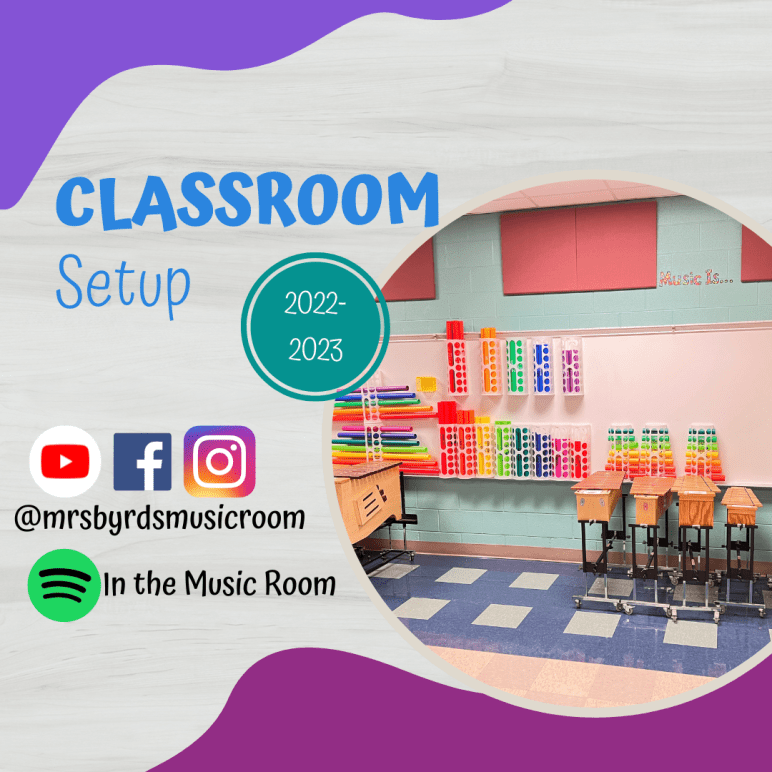
I feel this is a conversation that we need to have as an educational community. I may say some things you disagree with in this podcast, and that’s ok. I probably teach a way you disagree with, and that’s ok too. We aren’t carbon copies of one another and shouldn’t be. The students benefit from our unique personalities and approaches to education. When I think of classroom setup, I view it as an approach to education.

I’m Here eight or More Hours a Day: Let me enjoy my space!

Think about your favorite room in your house. Why is that room your favorite? Is it decorated nicely? Does it smell pleasant? Maybe you have scented candles, fancy lighting, or whatever brings you joy.

If I spend eight or more hours in my classroom every day, I should make it pleasing. I think of my classroom as my home away from home. I want it to look nice, feel comfortable, and be welcoming for students.

If this means I have to come to the school before my contracted time begins, then I will do that. I also write lesson plans off contract too.  

Writing Lesson Plans Off Contract so My Year is Smoother

While my teammates are stressed out during the year, I’m not because I’ve written my plans already. I know that sounds petty, but it is how I manage the stress throughout the year. I try to pre-plan as much as I can. It’s not ideal, and no, I’m not paid to do so, but I’m also not stressed out during the year like other teachers are. To me, that is priceless.

Shaming Other Teachers into Doing Things Your Way

I don’t come into your classroom and tell you how to and what to teach. You don’t walk into my classroom and tell me what or how to teach. Why is working on or off contract time any of your business? I’m not against advocating for teacher pay. I’m not against advocating for better work conditions for teachers, but I don’t need to pull my hair out during the start of the year to prove a point. My teaching partner doesn’t plan the way I do. She does things last minute, which stresses me out, but it works for her. She has very small children that need her during her time at home, so she’s doing what works for her and her family. I will not expect her to change how she manages her workload because I feel stressed. That is not how that works. It is her workload, and it is her time. We should respect how other teachers choose to do their jobs and mind our own business. After all, don’t we teach our students to mind their own business?

When teachers argue among ourselves, it is much easier for others to come in and tear down our system. We have very little control over what happens to our job. I have control over how I spend my personal time. If I want to spend time writing lesson plans or decorating my room, that is what I can control, and it is my business.

Let’s stop shaming the teachers who do the most in their rooms. Let’s stop shaming the teachers who don’t go all out and overboard in their rooms. Maybe too much décor stresses out those teachers, so they need bare walls. Maybe over-the-top décor makes that “extra” teacher feel safe and comfortable. Either way, let each teacher and their classroom show their unique personality.

Sing. Say. Dance. Play. Care.

Analisa

Classroom Management: Control the Chaos from Day 1


Establishing Classroom Rules for a Successful Music Class

Classroom management is crucial in creating a productive and encouraging learning environment. This blog post will explore practical strategies, tips, and techniques to help teachers successfully manage their classrooms beyond building relationships, calling parents, and relying on administrative support. This bottom-up design, starting with lesson instruction and building in classroom management, will keep the lesson flowing and save time and energy while teaching content and desired behaviors. Serious behavior concerns will be easier to address when the more minor, more annoyances and class disruptions are fewer and well-managed.

Creating a Positive Learning Environment in the Elementary Music Classroom

A positive learning environment begins by establishing the culture and climate within your walls. We see a variety of teaching styles and expectations within our day, but the children can and will adapt to your expectations independently of their classroom teachers.

Classroom climate is the psychological things such as the teacher’s behaviors or actions for or with their students. Examples are providing a diverse, fair, equitable, and trustworthy student environment. Creating and following the most current and proven effective teaching practices and safety precautions and following through with expectations will improve your classroom climate. We are constantly told that building relationships is the key to classroom management, but it is challenging to create a relationship with over 500 students; therefore, we must build those relationships within a lesson by focusing on student’s strengths, supporting students in and out of our classrooms (sharing them with the PE teacher during track, or other clubs) and by forming relationships with their parents. Your time is best spent building relationships with parents via Remind, Seesaw, and Class Dojo, apps where you can share what the students are doing collectively versus individual attention. In my classroom, I frequently adapt the phrase “we don’t do that in here” because I often have to remind students that I am not their classroom teacher, their PE teacher, or their fill-in-the-blank teacher so that they remember what I expect in my classroom. Lastly, spending time within a lesson to focus on students’ social-emotional growth is always an investment in time well spent. It promotes buy-in, celebrates their successes, and reminds them that your space is safe.


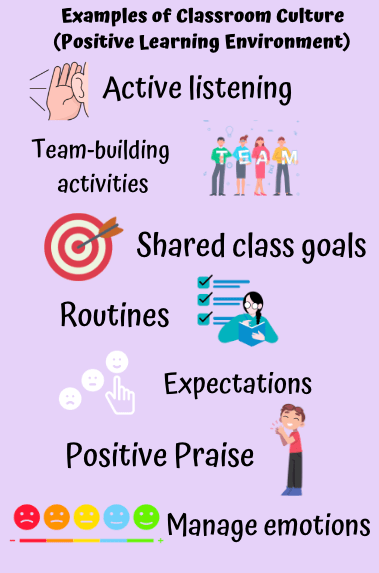
Classroom culture is the values and norms of how the students and the teacher will work together and their shared values, beliefs, and assumptions. Students want to know how you will make them feel connected to the class and content. To do this, focus on students’ strengths, praise their efforts, and connect with them outside the music room via choir or instrumental clubs.  Provide students with high expectations, increase support in areas they struggle with, both musically and otherwise, show respect to them by providing engaging lessons in a clean and organized environment, and make sure students feel physically and psychologically safe. Have students help you create classroom rules or at least agree on the ones you provide for them, especially rules about communication. Create a space where they can turn problems into teachable moments, placing a positive spin on problem-solving. Maintain a space with a nice flow to and from instruments, movement, and other activities to limit disruptions during transitions, and make sure your classroom décor is meaningful and is used in instruction, not just decoration. If you need to, have individual conversations with students about their behavior or needs, or even chat with the class unrelated to music to build a rapport with them. Lastly, you can provide a classroom job or jobs for students to feel ownership of their environment and learning space.

The Power of Routine: Structuring Your Music Class for Success

Clear and Consistent Procedures: Communicate the procedures and expectations for different activities in your music classroom. Consistency is critical in helping students understand and follow the routines effectively.


How students should enter and exit the classroom:

  • When establishing your classroom set-up, think about how the students will flow from the hallway into your classroom and their assigned spots. Will they sit in rows or semi-circles? Will you use chairs, stools, and sit spots, or students simply remember their spots?
    • In my classroom, I have the students sit on the carpet floors in five to six rows of five or six depending on their class size on body size (grade level)
    • In the front of the rows, I use poly spot arrows to point to the location that are colored, and I use their colors in my routines.
    • Their places are assigned, and they usually remain in these spots for about nine weeks, then we switch spots.
  • Once you know how your children will sit, you can then determine the routine for entering the classroom. Will you greet them at the door somehow? Will you do an entrance song or chant? Will you have a conversation with their classroom teachers?
    • I greet my classes at the door and establish this routine on the first week of school.
    • I let the classroom teachers know that the children are to enter my classroom with me greeting them at the door and conversing with them about absences, illnesses, or anything else I need to know to set my class time up for success. I want to know if Johnny is having a bad day or if Suzy didn’t get enough sleep last night because her mom had a new baby.
  • When class is over, are you ending abruptly or leaving time for a closing activity or lesson summary? Will you have a closing song or chant to get them into a line? What will you do for classes that struggle with making a line? Will you use their classroom teacher’s line order or establish your own method?
    • In my classroom, I try to leave time for closing and not end class abruptly, especially when considering my students who struggle with transitions.
    • I try not to end in the middle of a game but rather give students a heads-up that a game will end because we are running out of time. I have a chant for ending a game “If I do not go today, it’s okay!”
    • Once students are in line, I use this time for some rapport building, having conversations with students unrelated to music, or if we are behind, I use this time for singing a new song or reviewing a concept.
    • When a teacher is late, I try not to make a big deal about it. We all do our best to accomplish everything during our planning time, so I always show grace. Unless it’s getting out of hand or the same offender, then I have a conversation with them about it, but I always keep it light-hearted.

How to handle instruments and materials:

  • Consider your classroom layout, furniture set-up, and access to instruments when creating your routines for passing out materials. Does your environment allow students to access their materials independently, or will they need help? Do you want students to get their instruments, or will you pass them out? What are your instruments and other materials going to be stored in? Will the containers have lids and labels? Can this be a student’s job? What will the students do once they have their materials? What will the students waiting for their materials do?  
    • In my classroom, students are called by rows and get instruments themselves. This process begins in kindergarten with teacher help and extends to upper grades with student independence. Sometimes, I pass instruments out by rows if I have a class that struggles with independence. Whatever process I choose, I stick with it for at least a semester before I change.
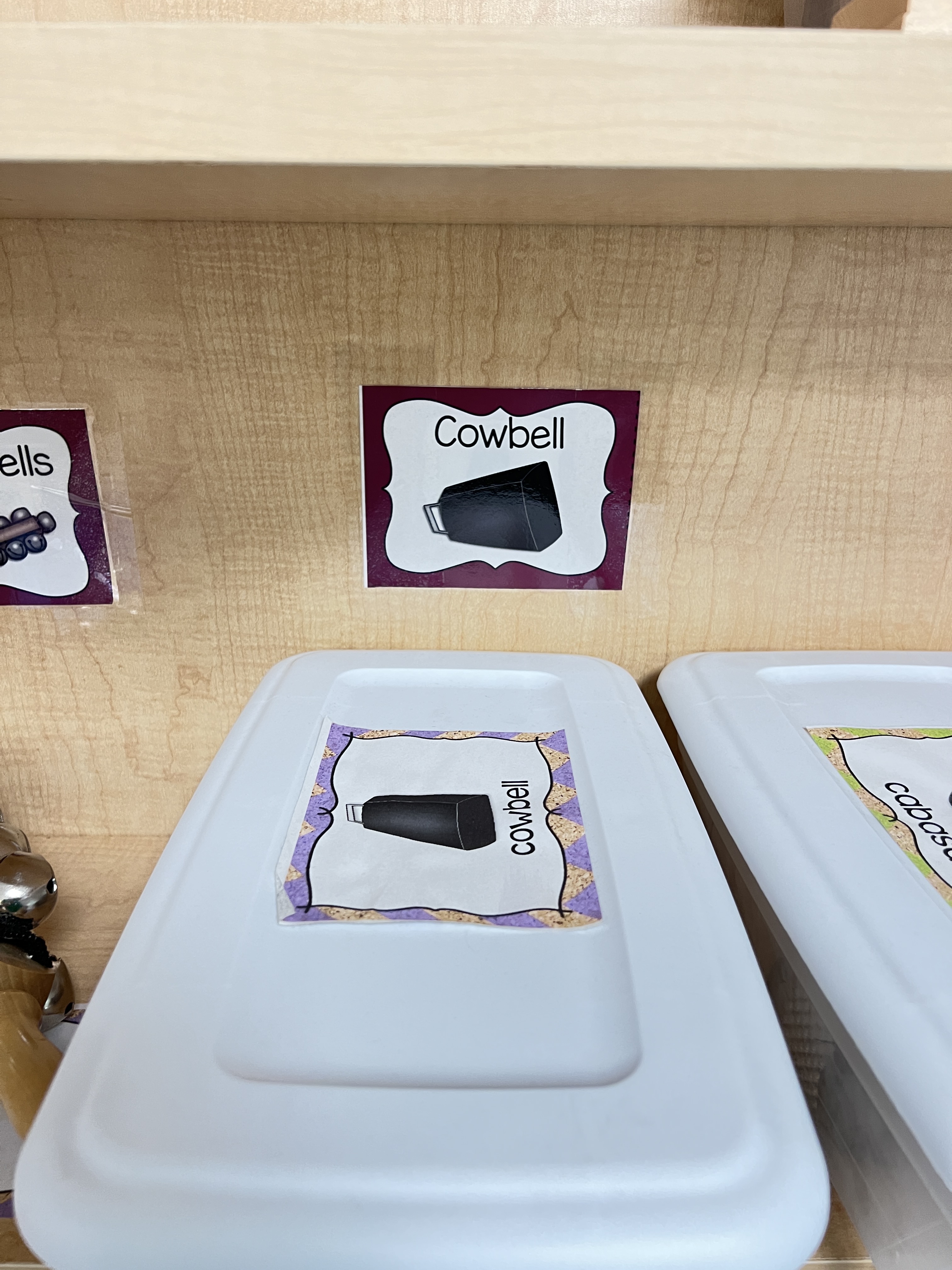
    • I have positioned my shelves where students can access them easily, and I place instruments on the shelves considering their relative height and grade level use. For example, rhythm sticks are lower on the shelves because kindergarten uses them more often than fifth grade. Every instrument is stored in a clear plastic box with a lid and is labeled with a picture and text. The same picture and text are also taped to the shelf where the container goes; if we need to remove the containers off the shelf for any reason, students can easily return them to their correct locations.
    • I have students place their instruments on the floor and wait for everyone to have an instrument in kindergarten and first grade. By second grade, I can start them playing an ostinato or keeping a steady beat with their instrument until everyone has one. Some classes cannot handle that, and they keep their instruments quiet while I continue to teach. It just depends on the grade level, experience, and class ability.
    • I follow this process for all materials, pencils, whiteboards, markers, papers, etc.

How to transition between activities:

  • Consider your classroom layout when transitioning to different activities and parts of the room. Will you use a chime, chants, singing, or silence? Will you do something different each time and use that to keep children engaged during transitions?
    • Whatever type of transition you choose, keep it consistent when moving throughout the classroom. For example, when I move from the carpet to the barred instruments, I always pair students together, and this takes a little bit of time. Still, I find it useful because I use their partner as a mini teacher, so I consider my pairings carefully.
    • When I move from playing barred instruments to the carpet, sometimes we sing, sometimes we chant, or sometimes we move silently. It depends, and the students know I will give the expectation before we transition.

Potty, water, nurse, tissues, all the things:

  • How will students ask to use the restroom, get a drink of water, go to the nurse, get a tissue, or any movement around the room that isn’t related to the whole group?
    • In my classroom, students are not allowed to use the restroom or get water during my class. This is a campus expectation for the safety of our students, as my restroom/water fountain is not located in my classroom, and the closest restroom/water fountain is down the hallway. In our current climate, student safety takes priority, and teachers are expected to take a restroom/water break before specials. Now, in the event of an emergency, we do have a buddy system we implement, but we do not routinely leave the classroom. 
    • If a student needs to get a tissue, they go get one; the procedure is “blow, throw, go” They blow their nose, throw their tissue away, go get hand sanitizer and return to their spot.
    • If a student needs to go to the nurse, we have a campus procedure where we send them with a buddy and a nurse slip that states what the student needs.

Age-Appropriate Routines: Consider your student’s age and developmental level when designing your routines. Younger students may need more guidance and explicit instructions, while older students may be able to handle more independent responsibilities.

Adapt your routines to suit the needs of your specific age group.

  • In my classroom, kindergarten and first grade follow the same routines for getting instruments because I use very explicit language and model everything from walking to the storage location, retrieving the instrument from the container, how to hold the instrument as we walk to our spot, how to place it safely on the floor or ready position, how to play the instruments, etc. I am very specific, and we practice, practice, practice.
    • Second through fifth grade have different expectations, but the same routines are in place. For example, I will give explicit instructions and model fewer times with the upper grades. I am quicker to have students put an instrument away if they do not follow expectations than with a lower grade level. If I have a fairly independent class, I can continue to teach while students get their materials.

Time Management: Plan your lessons and activities with a clear sense of time allocation. Determine how much time to allocate for warm-ups, instruction, practice, and transitions. Teaching students to manage their time effectively within the routines will help maximize instructional time and maintain a smooth flow of activities.

Lesson plan structure matters in a class that is only 25-50 minutes long. You must plan everything to the minute to ensure you are the most effective teacher you can be.


Room entry – 2 minutes

  • Take roll
  • Hello song
  • Stretching or Movement

Begin Lesson – 5 minutes

  • State objective – have students echo the objective for more buy-in
  • Warm up – vocal exploration, rhythm reading, solfege or rhythm games, concentration games, etc.

Lesson Target – 20-25 minutes

  • Focus song/activity
  • High-concentration activity and questioning

Game/Centers/Review – 20-25 minutes

  • Lower concentration activities
  • Singing games or rhythm games for practice or review
  • Centers for independent practice

Exit Room – 5 minutes

  • Line up song
  • Tidy up
  • Review behavior
  • Learn a new song
  • Chat with students

Flexibility and Adaptability: While routines provide structure, it’s essential to be flexible and adapt as needed. Allow room for unexpected circumstances or adjustments to the schedule. Adaptability ensures that your routines can accommodate changes and maintain a positive learning environment.

Keep up with your campus’ schedule and plan around assemblies, field trips, testing, or anything else that throw off the schedule for the planning cycle.

  • At my campus, I see classes once a week, so if I miss a Tuesday 4th-grade lesson, I have to consider all the 4th-grade lessons for that week so class can stay caught up.

Keep a copy of your schedule, sub plans, and basic routines available if you need to be out. Do you want a sub to play instruments with your students? Do you want a sub to show movies? Think about a routine for the substitute teachers to follow; teach that to your students so that when you are away, students can help keep your room clean and safe.

If you haven’t seen this Facebook post (insert a picture of the broken instruments), it is a sad reminder that substitutes do not always follow our plans. This is why teaching students the expectations you want them to follow while you are away is crucial. If you will be out for an extended time and can plan, teach your students your expectations for a long-term sub.


Involve students in the process of establishing routines. Seek their input and allow them to contribute ideas for structuring routines. When students feel a sense of ownership and involvement in the routines, they are likelier to adhere to them and take responsibility for their actions.

When possible and grade level appropriate, allow students to be involved in creating some routines.

  • For example, you can use students to pass out instruments instead of retrieving them if that works better for specific classes or student needs.

Teach and practice the routines explicitly at the beginning of the school year and periodically reinforce them throughout the year.

Consistent reinforcement helps students internalize their routines and become more independent.

  • Use explicit instructions when establishing routines and expectations.
  • Model everything, use student models, and use student leaders to help teach/demonstrate a routine.
  • Practice as often as a class or student needs to be successful and independent at executing the routine.
  • Review and practice routines after breaks and holidays. The review is good for the students and will increase their success.

Regularly reflect on the effectiveness of your routines. Assess whether they are meeting the needs of your students and if any adjustments or modifications are necessary. Classroom dynamics and student needs may change, so reviewing and adjusting your routines is essential.

  • If a routine is not working, do not be afraid to change the routine and re-teach the routine to your students. You can explain why it wasn’t working and why you are changing the routine to increase their buy-in.
  • If you have a routine that works for every class except one or two, do not hesitate to adjust the routine for a specific class. Using different routines with different classes is okay as long as you are consistent with their class.
  • You may need to adjust your routine for classes at the beginning and end of the day to allow for taking attendance or dismissing students.

Considering these factors, you can establish routines that promote a structured, efficient, and positive learning environment in your elementary music classroom.

As always,

Sing, say, dance, play, but above all else, care!

Analisa

Instrument Storage Ideas for an Elementary Music Classroom

When planning your classroom layout, you should consider how you will store your instruments for student use. Here I will outline some ways I store my instruments and make them accessible to my students to aid in their independence.

Small Percussion

Small percussion can sometimes be the worst to organize and keep neat throughout the school year, but I have found that keeping them in containers with lids is the best way to go.

When I put the instrument containers on my shelves, I consider the age of the students using them. I put the instruments that will be used by kindergarten most frequently lower to the ground and the instruments used by older students a bit higher on the shelf. As the year progresses, the kindergarten students will learn to get instruments off the shelf and put them away when they’re done independently.

Drums

In my classroom, I have various sizes of tubano drums, a few djembes, two pairs of bongo drums, a conga, and several hand drums. I organize the larger drums together and place the hand drums on the shelf with the other small percussion. I have a table in my classroom where I can put the larger drums on top of them and keep them off the floor. This isn’t the ideal location; however, it keeps the floor free for movement space.

Last year I used this table to store my drums.

I’m going to try this location this year (2022)

Orff Instruments and Mallets

I am fortunate to have 12 barred instruments and a menagerie of mallets in my classroom. I keep my barred instruments out all the time and use them almost every lesson. In past years I have kept the instruments in the back of my room behind the carpets my students sit on. This year I may put them off to the side of my classroom, but the only concern is that the students won’t be able to see the screen as easily. I keep the mallets on top of the instrument, ready to go. I keep all the extra mallets I use for my percussion ensemble in these small buckets I got from the Dollar Tree several years ago, and the buckets are labeled with pictures so that students know where to return them.

Ukuleles

For several years, I have kept my ukuleles in their boxes. I have Makala brand ukuleles in my room, and they came in these nice cardboard boxes that I numbered to match my student’s numbers. The boxes are starting to age and still look pretty good, but I’m thinking this year I will hang my ukuleles using Command hooks and the storage bags that came with the ukulele. I may use my Cricut to label the bags with their numbers. If I do this, I’ll be sure to update the blog with a photo of the finished product.

Update: I decided to leave them in their boxes. The wall just wasn’t going to work. I will add a photo to the blog when I bring them out.

Instruments for Teacher Use Only

I have several instruments for only my use, including my piano, ukuleles, and various percussion instruments. I keep these instruments close to where I mostly stand in my classroom and on a separate instrument cart that the children know is for teacher use. I only let students I know take piano lessons to play on my piano as I tell them that it is a tool for teaching and not one that I have enough to share or teach them all to play.

Labels

I suggest labeling everything with pictures and words so students can return the instruments to the proper containers. I even have the labels on the shelves where the boxes belong so that my student leaders can help clean up the classroom after we finish the lesson. You can make labels as creative or simple as you would like, but make sure you label everything!

Here are some labels I’ve used:

http://www.teacherspayteachers.com/Store/Lindsay-Jervis

http://www.teacherspayteachers.com/Store/Cori-Bloom

As always –

Sing! Say! Dance! Play! Care!

Analisa

3 Positive Primers for Elementary Music Classrooms

What are positive primers? A positive primer is anything that primes the brain to accelerate processing and the opposite is a negative primer or slowing the brain down. If I give you something to ready your brain for the response I’m looking for, I’ve primed your brain or accelerated its thought processes toward the memory I would like recalled. If I give you a positive primer and accelerate happiness, I can stimulate higher brain functioning. Today I would like to provide you with 3 positive primers for use in the elementary music classroom.

1. Greet Your Students at the Door

Your students need to see the exchange of power from classroom teacher to music teacher. In my classroom, I ask the teachers for attendance, mainly for student safety, but I like to know who is absent, in the nurse, at the counselor or what have you. It opens other conversations with classroom teachers such as “Johnny is in the counselor right now” becomes “Is Johnny alright, is there anything going on that I need to know about to help support Johnny while he’s in my classroom?”

While the children are entering the door, greet them with words or a safe, gentle touch. You may be the only grown up that gives that baby a hug that day, a handshake, a fist bump, whatever works for you, but greet your students as they walk in. Make it part of your routine, establish it very early on, and make sure the classroom teachers understand that this is part of your routine, and you are not going to make any changes to that, even if they are in a rush.

2. Transitions

Transitions happen so often in the music room and what better time to build relationships with our students. You can make them musical, silent, or a time to have a quick chat with your kids. You can absolutely use transitions as a brain break if your students are a little squirrelly. When you choose your brain breaks, make sure you are reading the room. Go Noodle is great, but make sure you are choosing the correct activity to meet your students’ needs. There are brain breaks that are escalating and will build positive energy and emotions into your lesson. If your students aren’t feeling it that day, and they are a bit low energy, you can try clapping games, yoga pretzels, racing games, movement activities, just have a dance party! Maybe your students are hyped up and have been cooped up on a rainy day and you need to bring them down, you can try a de-escalating break like mirror movements, quiet music, breathing exercises, and other calm movements to build in calm emotions, contentment, serenity, safety and focus for your students.

3. Independent/Whole Group Time

During whole group lessons, encourage your students to be mindful of their accomplishments and successful moments. Have your students perform for one another and share about what went well during the performance or what could be changed to improve their performance. Give them a script to try to follow or a sentence stem, such as, I enjoyed _____ during your performance because you did _____ and _____ well. Or I think _____ went well however it could be better if you changed _______. This will encourage positive dialogue, priming the students to make musical decision when creating music, and to accept criticism in a positive light.

When a student performs independently, whether is a small solo singing or they’re brave to share their compositions, praise them! Prime the experience with positive affirmations and a growth mindset and you’ll discover students are suddenly excited to perform and play music!

However you get your students ready to learn, positive primers are a great way to increase student engagement, stimulate brain functioning and get your students loving music class!

Sing, Say, Dance, Play, Care

Analisa

Resilience: Will We Survive This Year?

I know this year is hard. I’ve been in education for 16 years and have seen and heard a lot of education policy come and go. This year is no different, except that it is. The difference here is that we are literally trying to survive a virus that is raging all around us while being asked to move mountains with children. I know at my campus we’ve been asked to implement a few new things and with every step I feel the same way, “how am I supposed to survive until the end of the year, both literally and figuratively?” I hope this post can shed some hope and maybe help you feel some sense of peace for our future. Here I offer five ways to increase student resiliency and in turn, help your own resilience.

Resilience is the ability to bounce back from stress, adversity, failure, challenges, and trauma. When students are resilient, they take healthy risks, do not fear falling short, are curious, brave, and trust their instincts. Resilient students know their limits, push themselves, set and reach long-term goals, and can solve problems independently. So how do we go about promoting student resiliency?

Classroom Routines

When you create a positive physical space for students, you promote calmness and positivity. When you give the students brain breaks, predictable greetings, transitions, and independent work time, they can rely on the routine to help face adversity. In your routines, allow for time to focus on character strengths to teach children how to identify, recognize, practice, and use those strengths. Foster a place where mistakes are not only welcomed but embraced as part of learning. When your classroom culture reflects diversity, encouragement is the norm, and student input is valued, students in your class will be more likely to take risks and accept failures.

Acceptance

The first step to resilience is acceptance. You need to accept and validate their emotions, allow them to feel and work through their emotions in a healthy way, and always let them know you are there to help. Do not tell a student to stop doing XYZ when they are expressing emotions. If a student is crying, for whatever reason, validate their emotions, acknowledge their feelings, and help them understand that crying and feeling what they feel is okay, and let them know you are ready to listen when they are ready to talk. I am not a person that allows students to cry at the same level for every issue they encounter. I try to incorporate a learning opportunity of the severity of the situation versus their reaction. We react this way when someone hurts me but when I do not get the color I want, crying is alright, but we do not need to explode and become angry or violent.

Product Over Process

Do not emphasize product over process, especially in the elementary music room. We want students to explore, create, and learn music within the confines of what is right, sure. However, when we “teach to the test” as they say, we ruin that process. When we stress over the final product, the performance, this takes away from the learning process from which the students are learning all their vital musical skills. You do need to of course measure right from wrong, teach correct technique, but also allow students to try again without negative consequences. Let the process be a place of creative thinking and trial and error, not a time to perfect and polish a performance. During the learning process when a student is frustrated, turn their I can’t statement into a resilient statement such as, I’m tired and need a break or I have solved this problem before and I can do it again. Teachable moments happen all the time during music class or ensemble rehearsals. We can use those moments to talk about resilience and how we can not only improve has musicians, but as humans. When we do this, we show that resilience is not the stamina it takes do hang in there and learn a difficult concept, rather a process we go through to affect the outcome.

Be an Example of Resiliency

Show students that you make mistakes and can find another path.  When you tell students what and how you’re feeling and how you’re overcoming your stressors, it helps them decipher their feelings and manage their stressors. Students need to know that we understand them because we also go through hard times. Even now, during the pandemic, we can demonstrate resilience. We don’t have all the answers, and it is alright to be scared. When we acknowledge our fears about the future and demonstrate that knowledge is power it will help them remember that it is okay to be scared and uncertain, but we can make it through and move on!

Practice Self-Care: No, not spa days, pjs, and coffee

Teachers can suffer from caregiver fatigue very quickly. When you teach in a trauma informed environment, this lessens our potential for caregiver burnout. When you care for others with trauma you can suffer from insomnia, fatigue, aches, pains, lack of motivation, lack of concentration, isolation, anxiety, and feelings of hopelessness or anger. We can alleviate these symptoms by changing how we do things in the classroom to increase our own resiliency and our student’s. These are not permanent conditions, and you can overcome burnout. You can make simple changes like issuing trigger warnings before teaching a lesson. You can learn your students’ triggers (write them down if you need to) and do your best to avoid them or issue a trigger warning before proceeding. Allow students the chance to opt out of triggering activities without penalty. No, they can’t get out of work, but they can skip a song or lesson if it means they avoid being triggered and you avoid a trauma response. You can practice and teach a few grounding techniques by working with their classroom teachers or special education teachers to find out what helps the students calm down, reset, and move forward.

There are two camps about resiliency. Some feel resiliency is taught and practiced, much like learning an instrument. Others think resilience is something you are born with, like talent. As musicians we have a unique perspective on this as some of us are exceptional musicians because we worked at it, practiced, and became masters at our craft, others have raw, natural talent that helped along the way. We can see a struggling student and remember that resiliency is like learning music, either you have it easier with talent or you don’t, and hard work can move mountains.

Sing! Say! Dance! Play! Care!

Analisa

3 Tips for Effective Classroom Management That Are NOT “Building Relationships”

I’ve been teaching for 16 years now and the only tip I ever hear for effective classroom management is “build relationships”. Every time I hear that I must fight the urge to roll my eyes. It’s not the I don’t believe in building relationships, I do, but I’m also a realist and know that I teach over 500 students, and it is impossible to build a strong relationship with each and every student. I need advice that I can implement quickly, efficiently, and effectively. So here I offer three tips for effective classroom management that does not include building relationships.

1. Be Authentic

In elementary it is often easy to become condescending in your tone. Keep your tone authentic, they’re tiny humans not dogs. Use an authentic tone of voice even when speaking to kindergarteners. Kinder kids do not need the baby coo-ing, singsong, sickly sweet voice if that is not who you are. When you’re fake, the kids know. They know if you’re uncomfortable with your vocal tone, choice of words, and things like that and they will absolutely take advantage of that insecurity. If you are not a naturally silly person, that’s okay, you do not have to be. You do not have to adopt an entirely different personality. Think about the movie Kindergarten Cop, the lead character played to his strengths and the kids responded to that authenticity, that happens in real life, too.  

2. Be Consistent

As specialists, we also inherit the classroom management flaws of our classroom teachers. It is important that we set boundaries with our students and be consistent in our routines and expectations to overcome some of those issues. Being consistent in your discipline and your content delivery will greatly impact the flow of your classroom. Do not give empty threats to the kids to get them to comply. If you say you’re going to do something, then do it. The worse feeling is when kids do not trust you or your word because you lack follow through. Own up to your mistakes and apologize if you make one.

Become a predictable, broken record, when delivering expectations and consequences.

Be consistent with your routines when handing out instruments, materials, playing games, making a circle, all the things! On my campus we use CHAMPS, which is a PBIS approach to behavior management. Not only does this build consistency in your classroom expectations, but it also allows the students to become independent learners.

When you try to change a routine, give it time. If you are constantly changing routines because something isn’t working, it never gets a fair shake. Try the routine for at least a month or two, it takes 21 days to change a habit, so give it time.

3. Be Respectful

Kids will give back the energy they are receiving. They pick up on your vibe. They will give back respect, if they receive it, even THAT kid. Behavior is communication, if students are misbehaving, the energy is off. This is what people mean by building relationships, be respectful all the time. Give kids a time to tell their silly stories, let the chatter box talk your ear off occasionally, you may be the only person that will listen to them.

Watch your tone of voice when you’re upset. It’s hard for me, too, to keep a neutral tone. Sometimes I say things that are sassy, I must check myself and apologize, which goes back to being authentic and consistent. It happens, you’re human. I repeat myself multiple times, that’s when the tone shifts, and I must remind myself to stay in check, keep my tone authentic and give reminders to stay on task, focus, or whatever expectations is my goal.

When a kid feels confronted or backed into a corner, they will of course respond and often they will respond in an inappropriate way. Children do not regulate thoughts and emotions the same way we do. They act first, think second, and this is where we get impulsive behaviors from. It is our job as the adult to keep our tone and behaviors neutral and respectful.


A word about power and control. Do not engage in a battle of power with a student. You know you’re the one in control and power in the room, do not lose that focus, what you want is a student to feel safe, valued, and ready to learn. If there is a student in crisis, remind yourself that your number one job is their safety and learn to let things go. Defiance is usually part of a bigger problem than we can solve in a forty-five-minute class. Document your attempts at redirection, get administrative and parental support and remember to keep them safe, value their feelings, and eventually they will be ready to learn. I’ve had to remove students in crisis from my room before and felt guilty about it, but ultimately my job is to keep the other students safe, as well. Do the best you can, but keep your tone neutral and try, try, try, to keep your cool. I know, it is hard.


I hope these three tips are helpful for you and that you also feel validated in whatever approach to classroom management you choose. Building relationships is such a catch all phrase, but I don’t believe it solves the problems of system classroom management problems. If you consistently have classroom management problems, then maybe try one of these tips and see if they effect change.

Sing! Say! Dance! Play! Care!

Analisa
We are all struggling. You, my friend, are NOT alone.

Wow, we were all so excited to get back into our classrooms and see our students. I shed so many tears March 2020, through all last school year, and I would be lying if I said I had not shed a tear or two this year. Teaching is hard, the pandemic made it harder. The good news is you’re not alone. This is not only happening in your room, your campus, your district or even your county or state. This is happening all over the US, and I would imagine the world.

As much as we do not want to admit it, what happens in our classrooms is greatly impacted by what happens in the world around us. Our students are amazing, resilient humans that have been through so much. My district used the analogy of all of us being “in the same boat” and why that isn’t true. Some of our students weathered the storm in a canoe, some a sailboat, and some a yacht.

When I welcomed my students this year, I gave no thought to this analogy. Surely, my kids would be ready to jump into making music. Surely, they missed me as much as I missed them. Surely, they would be excited to join all the clubs, instrumental ensembles, all the things! No. No, they weren’t Their stamina isn’t what it used to be. They’re tired. Tired of just surviving.

So, I revisited the district’s analogy. I realized more than half of my campus weathered this ongoing storm in a canoe and they are traumatized, tired, and socially inept. None of these new traits are their fault but are a result of the mass trauma we are all going through right now.

What now, Analisa? I’m really struggling. I want to quit.

1. Meet your student where THEY ARE not where YOU WANT them to be.

My students are about a grade level and a half “behind”. I just did a third-grade lesson in fifth grade, and they loved it! They laughed, they played, but most importantly, they learned. Yes, they learned rhythms that I typically teach third graders, but they don’t know that, nor do they need to know that. Will they be ready for middle school music by the end of the year? I don’t know yet, but they’re happy and healthy, that’s what matters most right now.

2. Throw your IPG, YAG, BOY/EOY Assessments and whatever other acronyms you can think of, out the window.

I normally follow my IPG (Instructional Practice Guide) closely. I monitor where my students are, what they should be learning, where we are in the Orff process in relationship to my district/state expectations. This year I’ve had to readjust my YAG (Year at a Glance) and assess along the way to check for knowledge gaps. My kids are very strong at rhythms. Melody, elements of music and movement are lacking quite a bit. It makes sense that it is these objectives that are lacking as those are difficult to translate through a screen. We need to be okay with re-teaching concepts from a few years past. Our kindergarteners are the only ones that might be on track right now if they aren’t being held back by social skills and developmental delays due to lack of pre-school for some of them.

3. Focus on social emotional learning while you’re making music

I completely had a first-grade lesson go an opposite direction this last week, with my fine arts coordinator in the room. Now he was in the room just to hang out and see what we’re up to and just check up, no formal evaluation or anything like that, but the lesson went off the rails. I had taught this lesson three times already to my other first grade classes and had my pacing down pat. Then it happened. These little ones had a different idea in mind. They weren’t naughty or even off task, but they were very needy. I had to slow my pacing way down, give very explicit instructions in a part of the lesson I hadn’t planned on them struggling with, and model a ton. This took up time, time that I hadn’t expected to lose so I rushed the instructions on their composition pumpkins. Their little pumpkins that were supposed to have So/Mi teeth to play along to this week, basically have teeth with no melodic contour at all. It kind of became an art project rather than a composition. They don’t know that we messed up nor do they probably care. We had a blast, coloring, chatting about Halloween, and building those relationships that everyone keeps talking about. I explained to my fine arts director that I will most likely just adjust their lesson a little bit this coming week and I’ll give them pre-made jack-o-lanterns for them to play on Boomwhackers. I wasn’t going to sweat it. We had a moment, we grew closer together, we complimented each other’s color choices, we talked about being excited to trick-or-treat “like normal” again and they were happy. My job was done.

If you take anything away from this blog, take away this fact, you are not alone. You may be the only teacher on your campus that teaches music, but there are so many educators going through what you are going through. The kids are disrespectful, yes, I teach organic children, too. I believe if we adjust our content, our approach, and meet them where they are, the respect will return.

Sing! Say! Dance! Play! Care!

Analisa