5 Tips for Beginning and Maintaining a Successful Orff Ensemble

When I first began teaching elementary music, I was fresh out of college and had never set foot in an elementary classroom. When I fell in love with teaching elementary, I knew I needed to gain some more experience and naturally gravitated to the Orff process. If you want more information on the Orff Schulwerk you should check out the AOSA webpage. After teaching for about six years, I decided it was time for me to start an Orff ensemble at my campus. I have learned a lot over the last 7-8 years and would like to share my experiences with you. Here are the top 5 things I learned when beginning and maintaining a successful Orff ensemble.

1. Choose a really good name

You thought I was going to start with something pedagogical or about recruitment, didn’t you? Nope. Choosing the name for the ensemble is pretty important. When I selected the name of my ensemble, I thought of several words that were synonymous with music or sound. You’ll want to choose something that maybe has some alliteration with your campus name or mascot, something that your students can connect with. As the years have gone on, the name of my ensemble, Resonance, has become harder for the children to pronounce and relate too, but I believe that is the lapse of two years of performing.

2. Hold Auditions

I choose to hold auditions to narrow the number down to about 30. I have found that more than 30 is really difficult to manage, especially when it comes to writing parts. I use a rubric that looks like this:
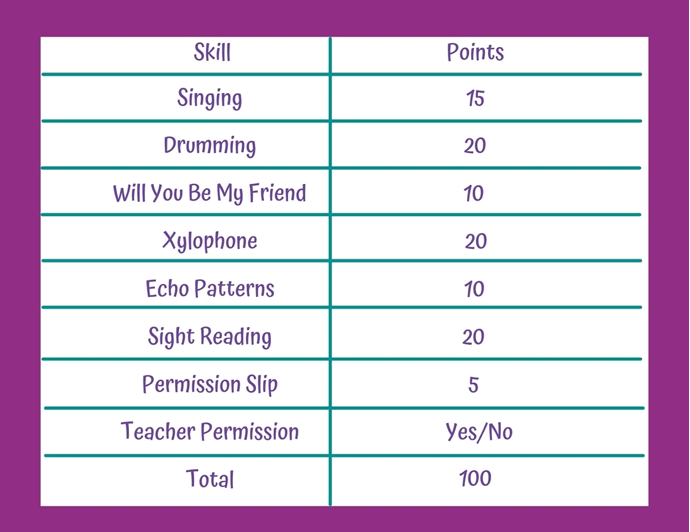
I give the students a packet with the music and links to videos (on my YouTube channel) to watch to prepare for their auditions. On audition day, I have the instruments set up and ready to go with copies of the music, on music stands (or they can use their own) and my iPad set up to record their audition. I record for two reasons, one, for me and my ADHD so I don’t miss anything, two, in case a parent questions their child’s ranking and acceptance. I can show the video and discuss what the weaknesses were. I listen to their audition, rate their score, and select the top 30 students. I do take into consideration their grade level to a small extent. If number 30 is a third grader and 31 a fifth grader and their scores are neck and neck, I may choose the fifth grader, since I want that fifth grader hooked on music before leaving for middle school. I do not always consider their grade level, but on rare occasions I do. I have a different scoring system for each grade level and adapt the rubric to reflect their grade level and skill level.

3. Be prepared to write arrangements

In my Orff levels I learned how to write arrangements for folk songs to fit the needs of my students. Now, with that said, writing for your percussion ensemble is kind of a different beast. I’ve had to write songs to go with books, arrange pop-songs (which means getting the appropriate permission), and add percussion parts to existing orchestrations to fill out an ensemble. It is incredibly time consuming, unless choose to use other people’s arrangements, which is fine, but gets expensive, too.

When I first started my ensemble, I used pieces we had done in class and just added more unpitched percussion parts and some contra bars. I basically take what they’re already learning and level it up. Now, I tend to choose a theme or book to structure the performance around and choose music to fit those ideas.

4. Prepare Rehearsals Ahead of Time

Anyone who runs an ensemble knows how crucial planning your rehearsal time is. When running a rehearsal, you have the parts of the music you want to work on, the parts the ensemble NEEDS to work on and then the parts that neither of you knew would fall apart and need to be worked on. I create a loose timeline of how and when I want things taught, and then I work around what the ensemble needs. Planning is great but be flexible. I teach one to two songs at a time so as not to confuse the children and bounce around between 4-5 pieces.

If you plan ahead enough, you can create practice videos for your students to watch and prepare at home. I give my students a paper xylophone to practice on and show them how to practice on body percussion or found sound objects so they can practice at home.

5. Comparison is Not Pretty

Do not compare your current chapter in your story to someone’s finished novel. If you are just starting out, or you’re having funding issues, or instrument issues, or whatever the case may be, comparing your group’s success to someone else’s will sink your ship before it ever sets sail. I work in a district that is very diverse. My ensemble is not going to perform to the same level as someone who has been performing for 20 years, my ensemble struggles with parent commitment/involvement, therefore a lot of the work goes on during rehearsal. We don’t all have access to devices at home all the time so expecting the children to practice at home does not always happen. I try to celebrate our strengths and highlight things we can do really well and work with the strengths of the ensemble. I am a firm believer that kids are kids and socioeconomic status should not change how we teach kids, however the hard truth is that it does. Access to materials, parent involvement, and the like, are all going to contribute to your ensemble’s success. I strongly believe you can find their strengths, write/arrange music to fit those strengths and create a dynamic Orff ensemble at your school.

Sing! Say! Dance! Play! Care!

Analisa

Should I Do Christmas in my Music Room?

There is much debate on whether Christmas belongs in the classroom, and I do not have an official answer, but I do have a possible solution. This week I would like to present to you three ways to celebrate holidays during Winter and how they relate the National Standards for Music.

1. More than Christmas

We must realize and recognize that there are more holidays that land during our Winter season than Christmas. We also must be sensitive enough to know that not all the “holidays” that have been commercialized are even that important to those who celebrate them. Christmas is important to Christians because it literally celebrates the birth Jesus Christ, but if you do some research, you’ll learn that Christmas is more of a secular event than a religious holiday in that the true history of the birth of Christ doesn’t really mirror that of the Winter season. The same can be said for Hannukah. If you research Hannukah you will learn that it is not one of the Jewish holy days and is a relatively minor holiday for their religion. Hannukah has gained popularity because of its proximity to Christmas in the United States.

This is where being the music teacher gives us a wonderful advantage, you know your entire school and hopefully know the different religions and cultures present at your school. You can work with the families in your building to learn about the cultures and celebrations that are relevant to your community and learn about those during the Wintertime.

Analyzing, comparing, and responding to music from various cultures is in every standard that you are well within your “rights” to incorporate these songs and activities into your lessons.

2. Around the World

If you are at a campus that is against acknowledging the holiday due to its religious nature, you could always frame your lessons as exploring music from around the world. Christmas music is music and because it has the elements of music, playing it, listening to it, and responding to it, falls in the realm of the National Standards. To be fair, you should include music from all cultures and religions and apply the same analysis to those pieces of music and not make Christmas music appear to be superior in any way. We shouldn’t do this regardless of your campus’ wishes about Christmas, but some of us do tend to show a bias toward Christmas especially in our holiday programs and concerts.

At my campus, we do perform a holiday performance that is centered around Christmas. Although no mention of God or Jesus, the performance is about Christmas or the “meaning of Christmas” as it pertains to hope, peace, and sharing. If someone wanted to be picky, Christmas is a religious holiday and should not be celebrated in school.

However, in Texas, the law is written,

Sec. 29.920
Winter Celebrations

(a)A school district may educate students about the history of traditional winter celebrations, and allow students and district staff to offer traditional greetings regarding the celebrations, including:

(1)“Merry Christmas”;

(2)“Happy Hanukkah”; and

(3)“happy holidays.”

(b)Except as provided by Subsection (c), a school district may display on school property scenes or symbols associated with traditional winter celebrations, including a menorah or a Christmas image such as a nativity scene or Christmas tree, if the display includes a scene or symbol of:

(1)more than one religion; or

(2)one religion and at least one secular scene or symbol.

(c)A display relating to a traditional winter celebration may not include a message that encourages adherence to a particular religious belief.

So celebrating, acknowledging, and decorating for Christmas is not only okay, but lawful.

At my campus we do a sing-along, where we teach songs from all over the world that are religious, multi-cultural, and offer different views points. We try to honor all cultures and religion in the music room and truly make it about the music and how music is used in and for celebrations, versus, here is this holiday we celebrate and play music in the background.

3. Let the Holiday Pass Without Celebration or Acknowledgement

I always say to be true to yourself. If the holidays are emotionally triggering for you, then do not feel forced to celebrate them or acknowledge them. You can study world music without incorporating secular Christmas music. You can choose to explain your choices to your students or not. It is your classroom and in the end, it is your choice.

In my classroom, we sing, say, dance, and play along to all types of wintertime music. We do listen to Christmas music, sing Christmas music, but we also play dreidel, sing Kwanza celebratory songs, and more! You know your campus and know your community, do what feels right for your classroom.

Sing! Say! Dance! Play! Care!

Analisa

Puppetry in the Music Room

I by no means am a master puppeteer. I do not know ventriloquism, nor do I have any idea how to properly puppet, if that’s a thing, but I love using puppets in my classroom! There are many reasons to incorporate the use of puppets in your music room including helping students acquire language (ELL learners and very young learners), encouraging students to be expressive with their thoughts, fears, and feelings, and finally, creating and bringing stories and music to life. Children live in a world of imagination and puppets help an adult enter the child’s imaginary world and allows children to experience empathy because they can relate to the character they are trying to portray. Let’s look at three ways puppets enhance learning in the music room.

1. Acquiring Language

When the children become comfortable with the puppet, they are more likely to take risks. Puppets become like sympathetic friends to the children, and they will try to speak with the puppets. The children do not feel threatened by the puppet and trust them. Puppets help improve communication skills, overcome language barriers, and help with self-control. The puppets can break down the barriers between teacher and student. Teachers can use puppets to introduce new vocabularies, create dialogue and teachers should plan their lessons in which the puppets can be combined with play. Puppets can be used to create dialogue and engage students in academic conversations without anxiety.

The use of puppets for second language learners is so useful! When you think about it, puppets introduce another fluent English speaker into a room of apprehensive second language learners. Children can witness the dialogue take place between two proficient speakers and it helps them rehearse the dialogue. The puppet becomes another someone to teach and helps with the information gap necessary for learning. Communication is an exchange of information, and this exchange is helped by the puppet’s lack of knowledge on any subject. Puppets are a real-life object, close to reality, therefore providing the English language learner a less intimidating partner to practice language acquisition with.

2. Expressing Themselves

Puppets create an environment that children can feel comfortable and less self-conscious in. The children become less inhibited, and they do not hesitate to take risks.

Children view the puppets as having human-like qualities and are therefore inclined to interact with it and speak to the puppet in a way they may not communicate with other children or adults.  

Analisa, what do I say to the student that insists it is just a puppet and is fake? Well, there is a few things you can do. You can acknowledge that the puppet is indeed inanimate and not real, but it is life-like, and it is fun to pretend. You could sound a little bit crazy and not even acknowledge that the puppet isn’t real and continue as if the puppet has its own personality.

I personally use the approach by saying “I know that. You know that, but they don’t know that, so we play along.” The kids get a kick out of knowing something the puppet doesn’t know and we’re able to just keep pretending and playing make believe.  

3. Bringing Stories and Music to Life

Understanding the difference between fantasy and reality. Lessons are active and lively and fun. Puppets can be used as a hook to learn the lyrics in a song. Puppets can be used to create storylines and create plays, in which students must interact with one another and cooperate to create the narrative. Students take a more active learning approach, and their engagement improves if the student becomes the puppeteer. I like to think of it as hands on is minds on – the children are involved in the learning and storytelling; this increases their interest in the lesson and leads to deeper understanding.

Ways to Teach Social Emotional Learning with Puppetry

Puppets can be a great way to engage students in conversation. You can use them as a greeting for the students, asking how they’re doing, encouraging the students to ask the puppet how they’re doing (modeling friendly social greetings). By doing this you are increasing their self and social awareness.

You can use the puppets to share emotions, learn to express emotions and think about another person’s emotions is a part of gaining social awareness. The child may be more willing to engage in a conversation with the puppet and you may, in turn, be able to communicate with the student about their thoughts and feelings.

If you have a student that struggles with game play and waiting their turn and winning or losing, puppets can help. The puppet can model waiting their turn in the game, or model winning and losing. A student is more likely to respond to this lower stress situation and have a better understanding of regulating their emotions in game play. By doing this you are increasing their self-management skills.

I would avoid allowing the puppet to demonstrate negative behaviors, keep the association with the puppets positive. For example, when the puppet loses the game have them demonstrate good sportsmanship by saying phrases to the other team like “good game” or “well played” or “thank you for playing with me”. We want the student to see themselves in the puppet and therefore we want the student to see themselves acting positively.

Students who take responsibility for the puppet showed a decrease in defiant behaviors, and increased responsibility of helping their puppet to listen and participate help the student maintain focus and prevented them from causing disruptions in class. By doing this you are increasing the student’s responsible decision making.

Obstacles to Overcome When Teaching with Puppets

Do the children grow bored?

The children love repetition, so growing bored of the same puppet doesn’t really happen, especially if you get creative with the use of the puppets. You can use a puppet as a hook, for vocal warmups, to aid in lyrics, and the list goes on. As you use your puppets for different things, the children grow fond of them and will ask to see them.

Do you have to be educated in puppetry?

            You absolutely do not have to be educated in puppetry or ventriloquism. The children will not care that your lips move when the puppet talks, especially if you let them use the puppet, they realize that it is being controlled by their arms/hands and their voices.

Expensive vs Inexpensive Puppets

Any type of puppet works, and you do not have to spend a ton of money on puppets. The more attached to the puppet the better, so if they created their puppet, they form an attachment to it. The cost of the puppet is not the issue here, it’s the willingness to use them and make them a part of your classroom.

I hope I have inspired you to try to use puppets in your music room.

Sing! Say! Dance! Play! Care!

Analisa
3 Ways to Use Color as an Accommodation in the Music Room

When our special education students or students with specific learning disabilities come into our classroom it is our job to provide accommodations for them so they can be successful. One of my favorite ways to accommodate for students is using color Before I discuss three ways to use color as a specially designed instruction (SDI) for a student, let me define an accommodation. An accommodation is a way to help students acquire the exact same content as their peers, whereas a modification changes the content. Here, I will discuss using color as an accommodation.

Color Coding A Behavior Plan

For students on a BIP (behavior improvement plan) color can be used for transitions and to stop/start certain behaviors. If a student has an SDI of high contrast materials or limited visual clutter, color can help focus on a specific behavior such as remaining seated on a colored spot or within a colored boundary. In my classroom I have a pink box in the back of the classroom that students can choose to sit inside if they need a break or need a place to just sit away. You would be surprised at how many students love to sit in the box, they feel safe there to just be themselves, move around and wiggle if they need to and not be a bother to those around them. This designated space also works well for students who have preferential seating or a colored boundary. I just used pink duct tape and created a 9X9 space on my floor, easy peasy!

Color Coding Visuals for Melody and Rhythm Instruction

ChromoNotes™ colors or Boomwhacker colors are the ones that are most popularly used in the elementary music classroom. I use ChromoNotes™ colors to color code melodic visuals in my classroom to help keep reading the melody consistent. My students begin to learn that C is red, D is orange, E is yellow, etcetera, and it carries over to all melodic instruments in my classroom. This is great for students who thrive with consistency. For rhythm, I use the

Note Knacks® colors devised my Kristen Pugliese to teach the number of sounds in a beat. For example, a quarter note is red because red has one sound, a pair of eighth notes is yellow because yellow has two sounds. My favorite in this system is terracotta for sixteenth notes!

This system works well to get students started on understanding that rhythm is the number of sounds in a beat and as the rhythms become more complex, the system adapts for that, too!

I use Magnetix for recorder which are trimmed in ChromoNote™ colors so that the students can read the color and the notes on the staff. I know that notes on the staff in “real” music is black, but the purpose is accessibility, if this makes the music more accessible, then why would I not try? If you do not want to use these branded color systems, you don’t have to. You can come up with any color-coding system that works for you and the student. The best accommodations are consistent accommodations and those that work for the student.

Color Coding Instruments  

Colored instruments or stickers on instruments are an accommodation for striking in the correct spot, holding an instrument correctly, etc. This method can be used if a student’s SDI is to identify and limit distractions by providing a “strike zone” for immediate success in playing the instrument. I use the ChromoNotes™ stickers on my Orff instruments to align with the color-coded music. I use the ChromoNotes™ bells, Boomwhackers, and keyboard instruments in my classroom to maintain as much consistency as I can. If you don’t have access to those, the stickers are a perfect option to help color code the instruments you do have.

Color is a wonderful way to provide an accommodation for all music students, especially special education students in music. By using color coding systems for behavior, visuals, and instruments special education students can learn the same content as the other learners. Color can be a dynamic way to meet student’s SDI’s in the music classroom! Give it a try!

Sing! Say! Dance! Play! Care!

Analisa
When Does Appreciation Become Appropriation?

A big topic of discussion in the music education community right now is being sensitive in our song selection and recognizing the need for change. Becoming a culturally responsive teacher is important and several blog posts have been written on this topic and you can check those out here and here, but I wanted to lend my perspective as a Hispanic, female, music educator.

Recently on TikTok there has been a viral dance to the song 35 by Ka Hao featuring Rob Ruha. This song is recorded by a youth choir from New Zealand, and it is about State Highway 35, a well-known road in New Zealand that brings natives nothing but fond memories when they reflect on their homeland. The song is gorgeous, has a beautiful message, and invokes feelings of joy and happiness in the listener. The song went viral on TikTok because a Māori creator choreographed a dance that went viral. Several users then went on to do this dance trend because that is how you TikTok. Well, other creators went about posting videos using the audio, but wrote text on the screen about being afraid to hurt someone’s feelings or appropriate a culture by doing the dance, to which the Māori people responded with love and gratitude and invited all to do the dance and enjoy the song, that this is the way of their people. (To learn more about the Māori culture you can go here).

@itibunda_ on TikTok
Original dance creator
@simba_reborn on TikTok

This viral sensation made me think about how we dance folk dance in our classrooms all the time and we are all different cultures. We teach and dance those dances as a form of teaching appreciation of music from different cultures. I wouldn’t think twice about teaching a Māori dance in my classroom, it would just be another form of appreciation.

So, when does appreciation cross the line to appropriation? Let’s think about the teacher in the Native American head-dress chanting SohCahToa and emulating what she believed to be Native American movements around her classroom. Whether or not the teacher is Native American or not, this crossed the line to appropriation. According to Oxford Languages the definition of appreciation is “recognition and enjoyment of the good qualities of someone or something” such as the beauty of a Māori style dance to a Māori artist song on TikTok. The definition of appropriation is “the action of taking something for one’s own use, typically without the owner’s permission” as it pertains to culture, “happens when another culture borrows any of the cultural elements, typically without asking permission or crediting the source culture and often has some misuse of cultural elements.” An example being a non-Native American chanting SohCahToa in her math classroom.

The Māori dance is appreciation because it is done as recognition and enjoyment of the good qualities of the Māori culture, dance, dress, and expressions and is in no way being done as a mockery of the culture. If I, a Hispanic person, were to put on traditional Māori dress, do the dance, and give credit to the culture, it is still appreciation. This happens when non-Hispanic people learn to dance folklórico. They wear the traditional dress, they style their hair in a traditional style, wear the traditional footwear, dance the traditional gender roles, and portray an appreciation of the culture. If I were to teach my elementary students a few dance movements from the folklórico tradition, it would not be appropriation. I would be sure to include the study mariachi, the instruments, rhythms, grito (or call) and show respect to the culture in addition to teaching the dance.

When do we cross a line to appropriation? Appropriation would be if I lumped all Mexican and Spanish dance styles together, like flamenco and folklórico, dressed up the kids, served Mexican food and held a “Hispanic Heritage” night without educating the audience or being specific with our intent. If you do not show respect to the different cultures, cuisines, and dress, then you are not being sensitive and have crossed the line to appropriation.

I say, teach the dance, learn about the cuisine, and culture, and find the beauty in music around the world. However, do not emulate the facial expressions of the Māori people outside of the dance or the grito of the mariachi and cross the line. When we take something that isn’t ours and make a mockery of it or use it in a manner that it isn’t intended for, that’s when we are no longer being culturally sensitive.

Sing! Say! Dance! Play! Care!

Analisa

Social Emotional Learning in the Elementary Music Classroom

Social emotional learning (SEL) is the process through which children and adults acquire and apply the knowledge, attitudes, and skills necessary to understand and mange emotions, set and achieve positive goals, feel and show empathy for others, establish and maintain positive relationships and make responsible decisions. Today’s kids are distracted, suffering from mental illness, and in the social media more than ever. It is becoming the job of the teacher to teach the whole child, the whole learner. We are teaching more than our content now, including their SEL needs. SEL programs effectively improve students’ SEL skills, behaviors, attitudes, and academic performance.  SEL has positive effects on academic performance, physical health, improves citizenship, is demanded by employers, is essential for lifelong success, and reduces the risk of maladjustment, failed relationships, interpersonal violence, substance abuse, and unhappiness.

As music educators we already provide the perfect environment to implement SEL strategies into our classrooms and ensembles. After school activities (choir/Orff groups) are a great place for students to develop and apply new skills. Weaving SEL strategies into your existing curriculum and pedagogical methods sounds like a daunting task, but I assure you, you already do so many of these strategies, it will simply require putting an emphasis on a different part of the lesson. I began focusing on SEL strategies in my classroom about 2 years ago when I received a training on my campus about this “new way of working with student behaviors” At first, I was overwhelmed with something new but when I began to look at the strategies through a different filter, I was able to see how we already do so many of these strategies in our music rooms already. I will discuss several examples here to help you feel empowered to add these strategies to your classroom.

Lessons to Promote SEL

Let’s look at a lesson that focuses on self-awareness, the understanding one’s own emotions, personal goals, and values. Assessing one’s strengths and limitations, having positive mindsets, and possessing a well-grounded sense of self-efficacy and optimism. The way I incorporate self-awareness into my classroom is by using a rhythm activity in which students review a variety of posted rhythms and are asked to make a prediction about how successful they feel they will be. At the end of the activity, I ask students to discuss how they feel about being right/wrong in their choices and we discuss their feelings about getting more/less right than what they predicted.

Rainbow Rhythms is a great way to get students reading rhythms and to make a prediction about how they will perform.

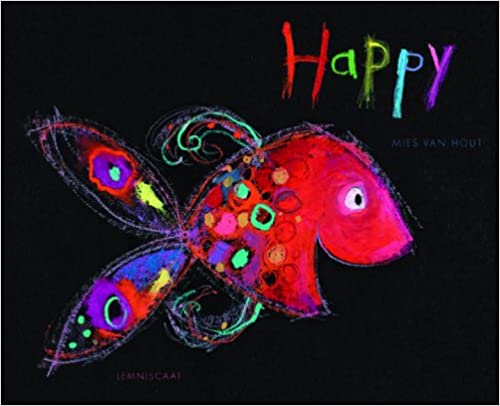
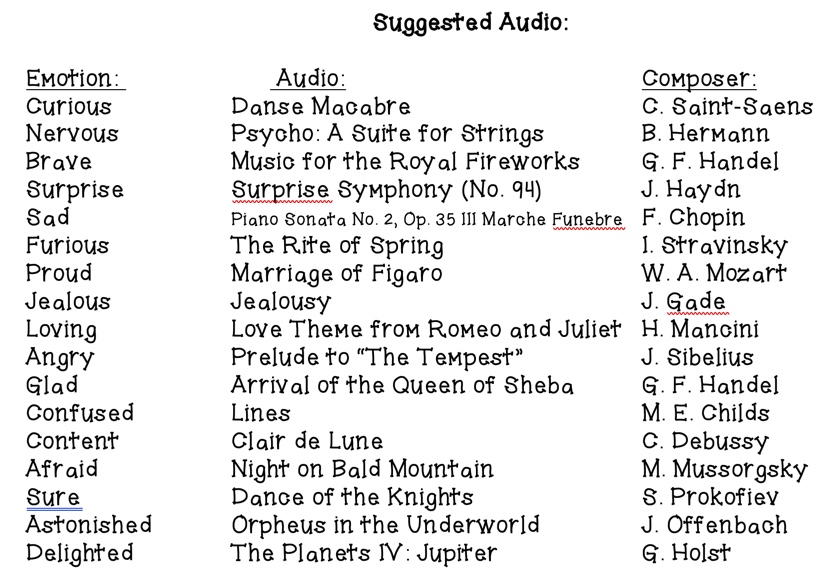
            An additional self-awareness lesson for younger students uses the book, Happy, by Miles Van Hout. Happy is a book about feelings using illustration to show the labeled emotion. The illustrations are vibrant and colorful, and the illustrator chose color palettes that fit identified emotion, beautifully. This lesson is easily spread across several days as there are 17 emotions identified. The process is simple, play the audio selection for the emotion (ie: Content, Clair de Lune by Debussy), discuss what it means to feel the emotion, and how the music fits the emotion, you can close by asking the students, “when do you feel ___?”

            A great lesson for self-management, the ability to empathize, delay gratification, control impulses, and demonstrate perseverance, are any and all games played in your room. When you play games, the children learn so much about self-management and self-regulation. Again, just switch the emphasis here to have students acknowledge that they are learning to control their impulses, persevere, and delay gratification. You can ask students a series of structured questions such as, “why do we take turns”, “why do we keep trying even if we begin to lose”, or “how did it feel when the other team…” Get the students to label their emotions and feelings, validate them, and move on. Pro tip for when students do not get a turn, I use this chant: If I did not go today, it’s okay! This prepares their minds to bring the game to a close and remind them that they can wait their turn for another day.

            Social awareness, the ability to understand, empathize, and feel compassion for those with different backgrounds or cultures is so easily reached within the walls of our classrooms. When we teach songs from different cultures, we should advocate for an artistic approach to world music instruction. We should study the musical elements of the diverse musical genres and aims at improving students’ musical knowledge and skills using a variety of music. During the lesson process the teacher should discuss more in depth the history and meaning of the song selection and have students put themselves in the perspective of someone from that culture. When we do this, we lend ourselves to have a beautiful discussion about why it is important to embrace songs from other cultures.

A brief note about songs from different cultures, we should acknowledge that music is cultural, and we should support the sociocultural approach, which studies world music in conjunction with their sociocultural and historical background. We should have an approach that centers on the understanding of how music is shaped within its context, on the meanings it has for its creators and listeners, and on the way that it reflects their ideas and lifestyles. We cannot ignore how music makes people feel, we cannot use songs in our curriculum because it meets our specific objective. We must have compassion for the history of the music and select pieces that are culturally responsible.

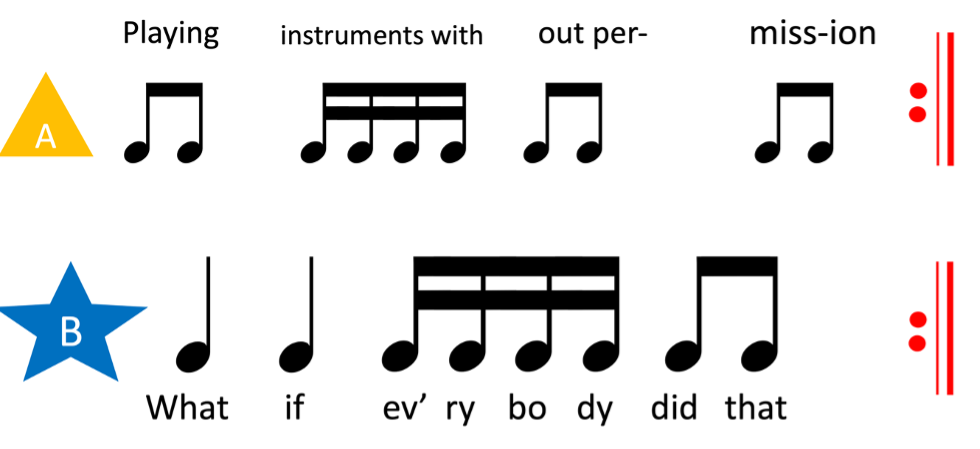
The development of relationship skills helps students establish and maintain healthy and rewarding relationships and to act in accordance with social norms. We provide students the opportunity to develop relationship skills through active listening, cooperation when performing music, through creative dance and movement and when composing or writing lyrics. A website that I have found success with writing lyrics and composing is https://www.flocabulary.com/unit/joining-in-and-including-others/, youclick on lyric lab to create lyrics using SEL vocabulary words. Another great lesson for relationship skills goes along with the book, What if Everybody Did That? By Ellen Javernick. In the story we follow a little boy throughout his day noting times that people would do precarious things such as littering and not taking a bath, that make him question “what if everybody did that?” . Once you’ve read the story, practice the rhythm of the B section, then practice the rhythms of the A section which are created from sentences written about common broken rules in the music classroom, then perform A, B, A’ etc…

Being a SEL Model

            Make sure your SEL activities or lessons are sequence to foster skills that are active to help students master new skills, focused on personal and social skills, and target specific social and emotional skills. As educators it is our responsibility to model, practice, and apply SEL strategies and allow our students to witness the process. One way to do this is show your mistakes and failures to your students. I used to think my lessons needed to flow smoothly and be relatively mistake free so the students would get the best learning opportunity. Now that I am SEL focused when I make a mistake I model how to appropriately react to my mistakes, talk to the students about how I am going to learn from the mistake, and what it will look like for the students I see later on to benefit from what I’ve learned. Mistakes are an opportunity to learn and grow, rather than something we should shy away from. When students would make mistakes, I used to focus on what they did incorrectly and work quickly to fix whatever the mistake was (mallet technique, pitch accuracy, recorder tone etc) and move on. Now that I am SEL focused I do not move so quickly, especially if the student is a perfectionist. I acknowledge their high standards for themselves but focus on the learning process and the fun. I let them learn the power of the word “yet” and we reframe our mistakes and say things such as, “I made a mistake when____ and I haven’t mastered that skill, yet.”  Promoting social and emotional development for all students in classrooms involves teaching and modeling social and emotional skills. We need to provide ourselves and our students the opportunity to practice and hone those skills and then a chance to apply them.

Impact on Discipline

Our students come from all different backgrounds and experiences. Often times their behavior is due to trauma and trauma often manifests itself in unwanted behaviors. We need to ensure our students that the school building is a place to safe, loved, and cared for. Children are allowed to feel their feels. Do not repressed a child’s feelings. Let them feel, express emotion, and how to go through the emotion. When students are able to label, identify, express and resolve their emotions, discipline improves.

Words of Caution

Misguided SEL curriculum is being highly researched right now to avoid the “quick fix” phenomena. SEL is not a quick fix, and we cannot fix all mental health troubles rather we can validate student’s emotions and make them feel safe. Incorporating SEL strategies can benefit student’s emotional health but doing so does not replace the help of a licensed mental health professionals. Watch and monitor your children and seek help if you notice behaviors or concerns that you believe should be addressed by a school counselor or other mental health professional. Everyone in the entire school building needs to participate for SEL to be the most effective. Communicate with your administrators on how you are incorporating SEL into your lessons and encourage your school community to do the same. I began adding SEL strategies to my lesson plans when I knew my lesson would provide an opportunity to do so. I communicated these with my administrator and also approached my school’s PBIS Team with the idea of incorporating SEL strategies school wide. As music educators we can begin these conversations and the hope is we can become a part of a larger whole.


This article was featured in the Southwestern Musician, a publication for the Texas Music Educators Association. You can find the link here, as it has a few more edits and thoughts.

Sing! Say! Dance! Play! Care!

Analisa
3 Tips for Effective Classroom Management That Are NOT “Building Relationships”

I’ve been teaching for 16 years now and the only tip I ever hear for effective classroom management is “build relationships”. Every time I hear that I must fight the urge to roll my eyes. It’s not the I don’t believe in building relationships, I do, but I’m also a realist and know that I teach over 500 students, and it is impossible to build a strong relationship with each and every student. I need advice that I can implement quickly, efficiently, and effectively. So here I offer three tips for effective classroom management that does not include building relationships.

1. Be Authentic

In elementary it is often easy to become condescending in your tone. Keep your tone authentic, they’re tiny humans not dogs. Use an authentic tone of voice even when speaking to kindergarteners. Kinder kids do not need the baby coo-ing, singsong, sickly sweet voice if that is not who you are. When you’re fake, the kids know. They know if you’re uncomfortable with your vocal tone, choice of words, and things like that and they will absolutely take advantage of that insecurity. If you are not a naturally silly person, that’s okay, you do not have to be. You do not have to adopt an entirely different personality. Think about the movie Kindergarten Cop, the lead character played to his strengths and the kids responded to that authenticity, that happens in real life, too.  

2. Be Consistent

As specialists, we also inherit the classroom management flaws of our classroom teachers. It is important that we set boundaries with our students and be consistent in our routines and expectations to overcome some of those issues. Being consistent in your discipline and your content delivery will greatly impact the flow of your classroom. Do not give empty threats to the kids to get them to comply. If you say you’re going to do something, then do it. The worse feeling is when kids do not trust you or your word because you lack follow through. Own up to your mistakes and apologize if you make one.

Become a predictable, broken record, when delivering expectations and consequences.

Be consistent with your routines when handing out instruments, materials, playing games, making a circle, all the things! On my campus we use CHAMPS, which is a PBIS approach to behavior management. Not only does this build consistency in your classroom expectations, but it also allows the students to become independent learners.

When you try to change a routine, give it time. If you are constantly changing routines because something isn’t working, it never gets a fair shake. Try the routine for at least a month or two, it takes 21 days to change a habit, so give it time.

3. Be Respectful

Kids will give back the energy they are receiving. They pick up on your vibe. They will give back respect, if they receive it, even THAT kid. Behavior is communication, if students are misbehaving, the energy is off. This is what people mean by building relationships, be respectful all the time. Give kids a time to tell their silly stories, let the chatter box talk your ear off occasionally, you may be the only person that will listen to them.

Watch your tone of voice when you’re upset. It’s hard for me, too, to keep a neutral tone. Sometimes I say things that are sassy, I must check myself and apologize, which goes back to being authentic and consistent. It happens, you’re human. I repeat myself multiple times, that’s when the tone shifts, and I must remind myself to stay in check, keep my tone authentic and give reminders to stay on task, focus, or whatever expectations is my goal.

When a kid feels confronted or backed into a corner, they will of course respond and often they will respond in an inappropriate way. Children do not regulate thoughts and emotions the same way we do. They act first, think second, and this is where we get impulsive behaviors from. It is our job as the adult to keep our tone and behaviors neutral and respectful.


A word about power and control. Do not engage in a battle of power with a student. You know you’re the one in control and power in the room, do not lose that focus, what you want is a student to feel safe, valued, and ready to learn. If there is a student in crisis, remind yourself that your number one job is their safety and learn to let things go. Defiance is usually part of a bigger problem than we can solve in a forty-five-minute class. Document your attempts at redirection, get administrative and parental support and remember to keep them safe, value their feelings, and eventually they will be ready to learn. I’ve had to remove students in crisis from my room before and felt guilty about it, but ultimately my job is to keep the other students safe, as well. Do the best you can, but keep your tone neutral and try, try, try, to keep your cool. I know, it is hard.


I hope these three tips are helpful for you and that you also feel validated in whatever approach to classroom management you choose. Building relationships is such a catch all phrase, but I don’t believe it solves the problems of system classroom management problems. If you consistently have classroom management problems, then maybe try one of these tips and see if they effect change.

Sing! Say! Dance! Play! Care!

Analisa

In the Music Room: Thanksgiving

I love kicking off the holidays in my classroom and I absolutely love all the turkey things! Here are some of my favorite activities to do in the music room for Thanksgiving.

A Turkey Dance by the Learning Zone

Any Turkey Can Tango by Lee Campbell-Towell

Turkey Gobbler – Check out O For Tuna Orff for her lesson plan!

I learned this song from my teaching partner. I do not know the original source. I looked for this exact melody but couldn’t find it. The Orff arrangement is mine, I hope you love it!

I love the poetry found on this site and have used a poem or two as a B section before for A Pumpkin Ran Away.

I’ve had this file for a long time and I cannot remember where I saw it. I researched and found a copy here, but I’m not sure if this is the original source. This is such a fun passing game that I love to do with the older kids. It is based of the melody of Zum Gali. Such fun!

5 Fat Turkeys from Spotlight on Music Pre-K

The audio is readily available on YouTube, but the track I use is from Spotlight so I am not going to post it here for copyright purposes.

These are the moves I learned over 15 years ago from a very sweet teaching partner. I still use them to this day. You can do any movements that feel comfortable for you. I use this song as a brain break with the younger kids.

5 fat turkeys… hold up five fingers

Are we…. point thumbs toward self

We slept… rest on your head on your shoulder

Tree… ASL for tree

When the cook… pretend to stir a pot

We couldn’t be found… pretend to cover your eyes

So that’s why… shrug with arms out, palms up

It is also fun on ukulele at 2:14:

Uses chords C, G7, and F with the melody altered a little bit.

If you wanted to keep it in F, you could always skip the IV chord (Bb) and just use F and C7!

Check out THIS POST for books I like to use for Thanksgiving!

I Know An Old Lady Who Swallowed a Pie

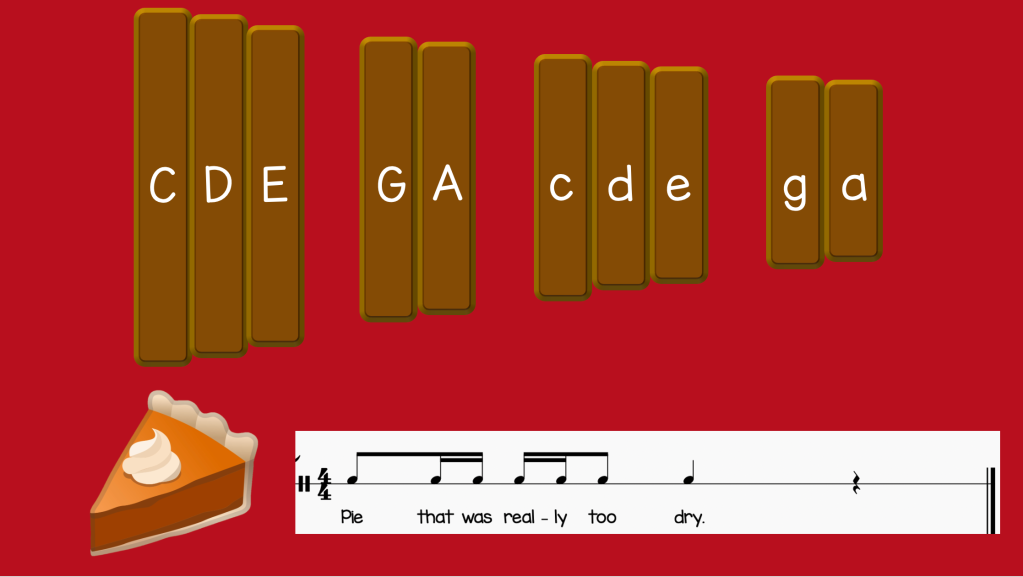
One of my favorite books to use around Thanksgiving is “I Know an Old Lady Who Swallowed a Pie”. You could read and sing along and that would be fun, but I have included extensions to the book for classroom instruments, Orff instrument improvisation and recorder improvisation.

Use any percussion instrument you would like. Percussion clipart included.

Improvise in C Pentatonic

Improvise in C Pentatonic on recorder

Teaching On A Prayer

Full disclosure, my friends, I got the idea for this blog during my church’s Trunk or Treat when Livin’ on a Prayer came on and it made me think about how teachers are surviving right now. We’re surviving on sheer will and quite frankly, a prayer. We have to hold on to what we’ve got, it doesn’t make a difference if we make it or not, we’ve got each other and that’s a lot…  Oh, we’re halfway there, o-oh teaching on a prayer! Truer words have never been spoken, Mr. Bon Jovi. Can you believe we still have over 7 months until the summer? How will we ever make it there?  

5 Things to Get Us to the Summer

1. Hold on to what we’ve got

We’ve spent half the school year either avoiding getting sick, being sick, keeping kids from getting sick and trying to teach without enough. Enough staff, stuff, and all the things. We need to keep holding on to the things we do have and keep working. The students aren’t misbehaved because they dislike us or our content, they’re misbehaved because they are trying to regulate. Trust me, just when we find our groove, summer will hit, and we will have to reset in August again. Find ways to use existing resources, TpT resources, social media, and your fellow music teachers in your district to find new and innovative ways to teach students your content. The children are not fully ready to dive into full grade level content and that is ok. The beauty of what we do is that we watch these kiddos grow up and we get to adjust to their specific needs. How cool is that? Other grade level teachers do not have that luxury, but we do. We can adjust in the years to come; we can send our fifth graders off knowing they are loved and valued and have an appreciation of making music with people who care for them. That’s an amazing thing we should not discount.

2. Find someone in your building to talk to

I know that often times music teachers are working alone and do not have another person in their building to talk to about specific music things, but I’m sure there is someone in our building that can commiserate with you about administrative changes, directives that make no sense, and student shenanigans. Sometimes just venting about those things is enough to keep the grumpiness away. We need to know we are not alone in our feelings and in our struggles. Also, we may also be the person who can offer some insight on how to solve some problems and think outside the box.

3. Plan, plan, plan and prepare for the plan to fall apart

I’m a planner, in fact I own like three of them. I’m also able to teach the best lesson by the seat of my pants. Impromptu observation when you planned to show a video about instrument families to save your voice for the tenth time that week? No problem! I can launch into an instrument petting zoo, with information about all the things, complete with higher order thinking questions. I can also plan every song, by concept, for months in advance and execute those plans without even batting an eyelash. Plans are wonderful, long-range planning brings us some comfort, short range planning is great for the times we have disruptions to our plans, but will the lesson fall apart, probably. Will there be a fire drill for the millionth time that month, absolutely, you can plan on it. Have some back up plans ready to go, some quick teach, group activities you can pull out whenever you need to. Have a stash of books, play-alongs, videos, coloring sheets, anything you can quickly pull out, teach, and send the kids off to work on. If a lesson tanks, do not take it personally, dust off that game the kids love to play and do that instead.

4.  Don’t be afraid to dream: Dream of what used to be and what will be again

I miss the old days, when I would work for months on a performance that lasted 26 minutes, that we would somehow stretch to at least 30 minutes so that our PTA meeting would be a total of 45 minutes and worth the parents drive up to the school. I don’t think those days are completely gone, but they are on hold for everyone’s safety right now. So, let’s do some “informances”, use the skills virtual learning taught us and make videos of our kids and what we’re doing in our classrooms and push those out via Google Classroom, SeeSaw, or even Zoom! Bring the parents to your classroom and show what our kids can do and keep reaching out to the community. We put together a video of some of our classes singing a Veteran’s Day song to post on our schools’ social media instead of our entire school Veteran’s Day program we used to host. It is a huge deal at our school, but we just didn’t feel it would be safe to do this year, so we came up with something else. We can still reach our community, advocate for music education, and bring awesome music to our families, just in a different way.

5. Take my hand, we’ll make it, I swear!

Find other music teachers you can brainstorm with, follow my blog and social medias, and a few others I follow here:

Becca’s Music Room by Rebecca Davis

Mrs. Miracle’s Room by Aileen Miracle

O For Tuna by Aimee Pfitzner

Make Moments Matter by David Rowe

We can do this, friends! Together, we can conqour this school year and not only survive, but thrive!

Sing! Say! Dance! Play! Care!

Analisa